

Accelerate Process Development with High-Throughput Parallel Bioreactor Systems
Parallel bioreactors are sophisticated systems engineered to execute multiple biological reactions under either identical or independently controlled conditions, facilitating rapid and reliable process development. In the competitive biotech landscape, these platforms are essential for strain screening, cultivation, enzyme studies, and the optimization of critical bioprocess parameters. By supporting simultaneous experiments, these systems significantly enhance throughput, data consistency, and experimental reproducibility.read more
This type of bioreactor platform bridges the gap between early-stage research and manufacturing. Its modular architecture allows for the seamless integration of analytical tools and advanced data-management systems, empowering researchers to make efficient, data-driven decisions during upstream processing. Whether utilized for microbial fermentation or cell culture, the ability to run concurrent experiments drastically reduces the time required to bring therapeutics to market.
What are the Key Features of the Parallel Bioreactor Platform?
- Centralized Control Architecture: The parallel bioreactor system incorporates a powerful master control tower with satellite modules that manage pumps, gas-mixing units, temperature control, and chillers. This architecture allows configuration of up to 36 bioreactors, each with fully independent control over culture conditions to ensure process insights are based on precise data.
- Advanced Sensing Technology: Built-in optical pH and dissolved oxygen (DO) sensors provide enhanced accuracy and long-term stability compared with conventional electrochemical probes. Their durability reduces drift and minimizes recalibration needs during extended fermentation or cell cultivation runs.
- Precision Gas Flow: Integrated mass flow control system (MFCS) mass-flow controllers deliver precise regulation of gas supply for both microbial and mammalian processes. This level of automation improves oxygen transfer, supports complex aeration strategies, and ensures consistent process performance across the bioreactor platform.
- Accurate Fluid Management: Variable-speed, bidirectional pumps allow highly accurate addition and removal of liquids throughout the culture run. They support feeding, sampling, and media-exchange operations while maintaining tight control of working volume and nutrient supply.
- Contamination-free Mixing: A magnetic coupler system eliminates mechanical seals, greatly reducing the risk of contamination during agitation. This design ensures clean, reliable mixing for sterile operations involving sensitive mammalian or stem-cell cultures within the reactor.
- Modular and Flexible Design: The modular framework enables quick reconfiguration and easy integration of different vessel types, including single-use bioreactors or peripheral modules. It supports diverse applications ranging from mammalian and insect cells to microbial fermentation and human stem-cell systems at the bench-top scale.
- Intelligent Software Integration: Advanced software supports sophisticated bioprocessing control, comprehensive data management, and efficient design of experiments (DoE) implementation.
- Real-time Analytical Insights: Seamless integration with process analytical technology (PAT) devices, including biomass sensors, optical-density monitors, gas analyzers, glucose analyzers, alcohol analyzers, partial-pressure-of-carbon-dioxide analyzers, and high-performance liquid chromatography systems, provides real-time process insights for high-quality bioprocess development and metabolite tracking.
What are the Applications in Biotech and Bioprocessing?
- Bioprocess Development and Optimization: Parallel bioreactor systems accelerate the refinement of culture conditions, feeding strategies, and operational parameters, providing rapid insight into process performance.
- Strain and Cell Line Screening: Multiple microbial, mammalian, insect, or stem-cell lines can be evaluated simultaneously to identify high-throughput candidates that offer superior yield or growth characteristics.
- Media and Formulation Studies: Different media compositions, additives, and feeding regimens can be tested in parallel fermentation runs to determine optimal nutrient profiles.
- Scale-Down and Scale-Up Modeling: The precise control and advanced analytics make parallel bioreactors strong tools for modeling large-scale biotech processes at lab scale, ensuring data is scalable and reliable.
- Quality-by-Design (QbD) and PAT-Driven Studies: Integrated analyzers and sensor technologies support real-time monitoring required for QbD frameworks and regulatory-compliant upstream development.
Showing 1–12 of 57 results
Category
- Bioreactors+
- Parallel Bioreactors
- Single-Use Bioreactors
- Stirred-Tank Bioreactors
- Capillary Electrophoresis Instruments+
- Capillary Gel Electrophoresis (CGE)
- Capillary Isoelectric Focusing (CIEF)
- Capillary Zone Electrophoresis (CZE)
- Cell Counters and Analyzers+
- Automated Cell Counters
- Manual Cell Counters
- Cellular Imaging Systems+
- Fluorescence Imaging Systems
- High-Content Imaging Systems
- Live-Cell Imaging Systems
- Centrifuges+
- Benchtop Centrifuges
- Clinical Centrifuges
- Micro Centrifuges
- Refrigerated Centrifuges
- Ultracentrifuges
- Chromatography Instruments+
- Gas Chromatography
- Ion Chromatography
- Liquid Chromatography
- Flow Cytometer+
- Cell Analyzers
- Cell Isolation Systems
- Cell Sorters
- High-Throughput Flow Cytometers
- Imaging Flow Cytometry
- Personal Flow Cytometers
- Portable/Benchtop Flow Cytometers
- Spectral Flow Cytometers
- Laboratory Incubators+
- CO2 Incubators
- Dry Bath Incubators
- Hypoxia Incubators and Chambers
- Incubator Shakers
- Laboratory Ovens
- Portable Incubators
- Thermal Mixers
- Laboratory Microscopes+
- Atomic Force Microscopes (AFM)
- Automated Modular Microscopes
- Compound Microscopes
- Confocal Microscopes
- Digital Microscopes
- Fluorescence Microscopes
- Inverted Microscopes
- Live Cell Imaging Microscopes
- Metallurgical Microscopes
- Multiphoton Microscopes
- Polarizing Microscopes
- Raman Microscopes
- Scanning Electron Microscopes (SEM)
- Stereo Microscopes
- Super-Resolution Microscopes
- Transmission Electron Microscopes (TEM)
- Upright Microscopes (Neuroscience)
- Liquid Handlers+
- Automated Pipetting Systems
- Multi-Channel Liquid Handlers
- Robotic Liquid Handlers
- Variable Volume Pipetting Systems
- Mass Spectrometers+
- Ambient Ionization
- APCI MS
- ESI MS
- FT ICR MS
- ICP MS
- Orbi Trap MS
- Quadrupole MS
- Time-of-Flight MS
- Microarray Scanners+
- DNA Microarray Scanners
- Laser-Based Microarray Scanners
- Microplate Readers+
- Absorbance Microplate Readers
- Fluorescence Microplate Readers
- Luminescence Microplate Readers
- Multimode Microplate Readers
- Particle Counters and Analyzers+
- Airborne Particle Counters
- Laser Diffraction Analyzers
- Liquid Particle Counters
- Nanoparticle Analyzers
- Portable Particle Counters
- Remote Particle Counters
Brand
- ACCU-SCOPE
- Agilent
- Airmodus
- Alphasense
- Analytik Jena
- ARGO-HYTOS
- Arrayit
- Aurora Biomed Inc.
- Azure Biosystems
- Baker
- BD Biosciences
- Beckman Coulter
- Beijing Challen Biotechnology
- Binder
- Bio-Techne
- Biobase
- BioRad
- BMG Labtech
- Bruker
- Celestron
- Cellbox
- Centurion Scientific Ltd
- ChemoMetec
- CleanAir
- Cleatech
- Corning
- Countstar
- CS Instruments
- CUBIC
- Cytek Biosciences
- Cytena
- Cytiva
- Data Technologies
- Descase
- Electrolab Biotech
- Eppendorf
- Euromex
- Evident
- Fermex
- Fluke
- Formulatrix
- Getinge
- Gilson
- GPC Bio
- Haier Biomedical
- Hamilton Company
- Hettich
- Hitachi High-Tech
- Hudson Robotics Inc.
- Hydro
- INFORS HT
- Innopsys
- Jasco
- Jeiotech
- JEOL
- Kanomax
- Keyence
- KNAUER
- LAB-KITS
- Labomed
- Labwit
- Leco
- Leica
- Lighthouse
- Logos Biosystems
- LOSI
- Lumex Instruments
- Luminex
- Malvern Panalytical
- Meiji Techno
- Memmert
- Merck
- Mettler-Toledo International Inc.
- Miltenyi Biotec
- Molecular Devices
- Motic
- MP Filtri
- MSE (Medical and Scientific Equipment)
- NCI
- Nikon Instruments
- NuAire
- ORFLO Technologies
- Oxford Instruments
- PAMAS
- Particle Measuring Systems
- Particles Plus
- PBS Biotech
- PCE instruments
- PerkinElmer
- PharSol
- PHCbi
- Prior Scientific
- Promega
- Qiagen NV
- Revvity
- RION
- Sartorius
- SATAKE
- Sciex
- Sebia
- SETA
- Setra
- Shimadzu
- SIBATA
- Sigma Laborzentrifugen GmbH
- Solaris Biotech
- Solida Biotech
- Sony Biotechnology Inc.
- SPT Labtech Ltd
- Stratedigm Inc.
- Sysmex Corporation
- Tecan
- TES
- Thermo Fisher Scientific
- TSI
- Waters
- Western States Machine Company
- ZEISS
- ZETRON
-
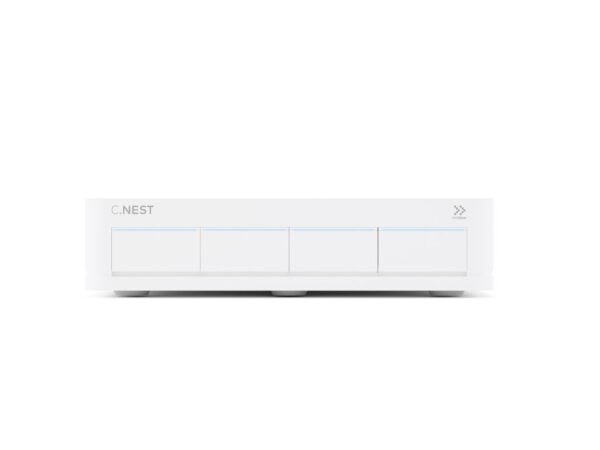
Cytena C.NEST
Supports scalable, reproducible lab-scale processes with advanced automation, parallel cultivation, and real-time data tracking, ideal for cell line d...
-
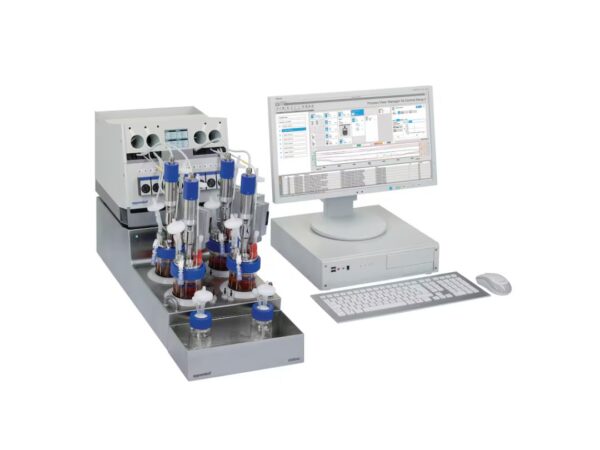
Eppendorf DASbox Mini Bioreactor System Catalog No-76DX04CC
Scalable 4‑channel mini bioprocessing with control of pH, DO, temperature, and agitation for microbial/cell cultures.
-

Eppendorf DASbox Mini Bioreactor System Catalog No-76DX04CCSU
4×0.8 mL SU bioreactor with pH, DO, temp, agitation control in sterile-ready setup.
-
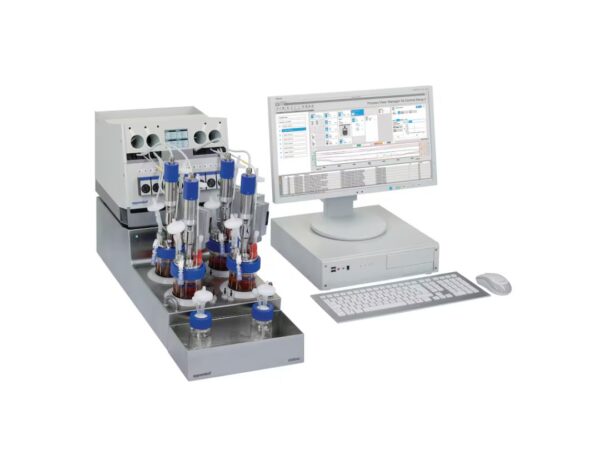
Eppendorf DASbox Mini Bioreactor System Catalog No-76DX04MB
Four 8 mL vessels support control of pH, DO, agitation, and temp for process optimization.
-
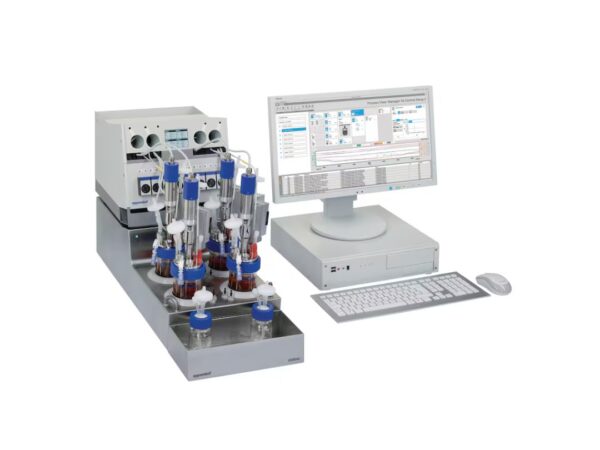
Eppendorf DASbox Mini Bioreactor System Catalog No-76DX04MBSU
DASbox® SU supports 4×8 mL sterile bioprocessing with precise physicochemical control.
-
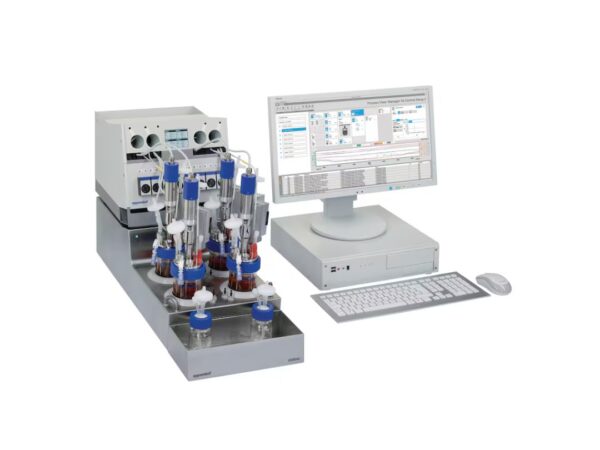
Eppendorf DASbox Mini Bioreactor System Catalog No-76DX08CC
Eight 8 mL reactors with pH, DO, temp, and agitation control for efficient scale-down bioprocessing.
-
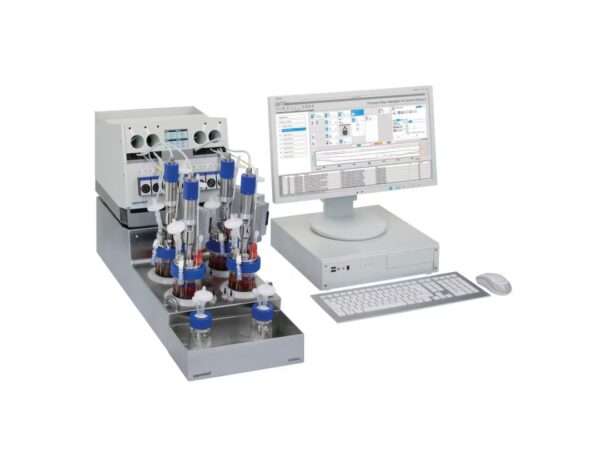
Eppendorf DASbox Mini Bioreactor System Catalog No-76DX08CCSU
Sterilizable DASbox SU supports 8×8 mL sterile cultures with precise control over pH, DO, temperature, and agitation–ideal for high-throughput biop...
-
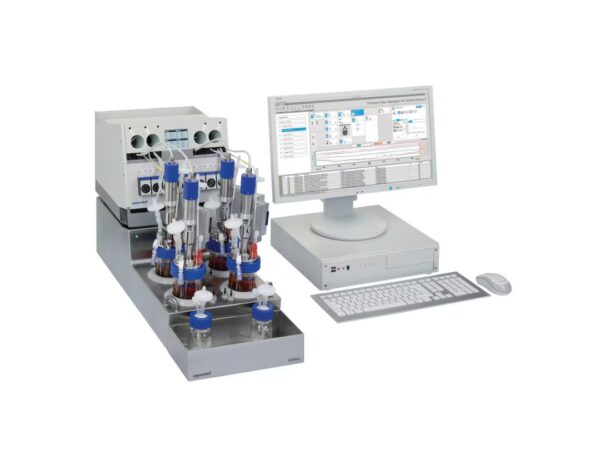
Eppendorf DASbox Mini Bioreactor System Catalog No-76DX08MB
DASbox supports four parallel 8 mL cultures with precise control of pH, DO, temperature, and agitation—perfect for early-stage bioprocess developmen...
-
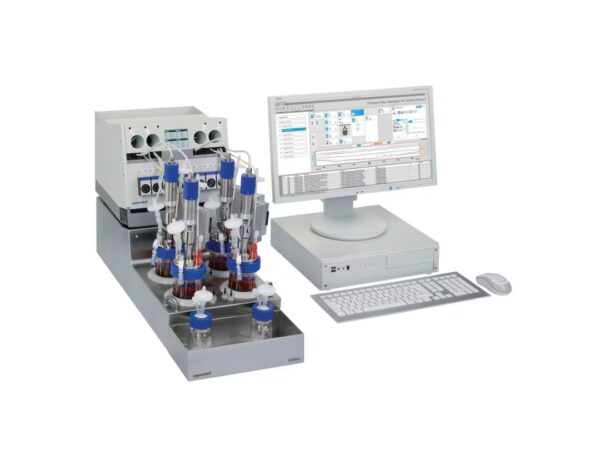
Eppendorf DASbox Mini Bioreactor System Catalog No-76DX08MBSU
Sterilizable DASbox SU supports four parallel 8 mL sterile bioreactors with integrated pH, DO, temperature, and agitation control for process developm...
-
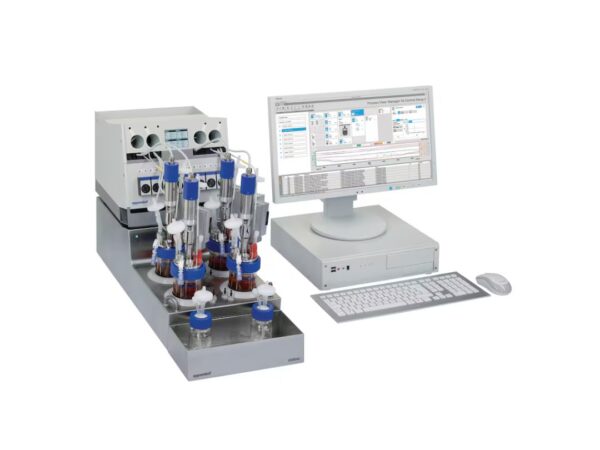
Eppendorf DASbox Mini Bioreactor System Catalog No-76DX12CC
DASbox offers twelve parallel 8 mL mini bioreactors with control over pH, DO, temperature, and agitation for efficient high-throughput bioprocess scre...
-

Eppendorf DASbox Mini Bioreactor System Catalog No-76DX12CCSU
Sterilizable DASbox SU offers twelve parallel 8 mL sterile bioreactors with control of pH, DO, temperature, and agitation for advanced bioprocess deve...
-
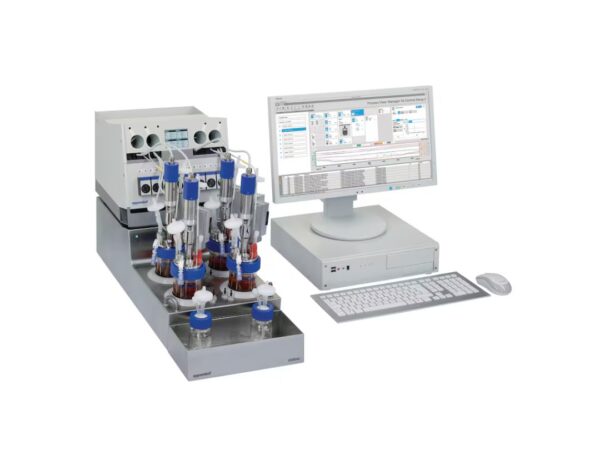
Eppendorf DASbox Mini Bioreactor System Catalog No-76DX12MB
DASbox MB includes twelve parallel 8 mL mini bioreactors with enriched integration of sensors and pumps, enabling comprehensive control of pH, DO, tem...