

Automated Cell Counting and Image Cytometry: Advancing Viability Analysis with Fluorescence and Brightfield Cytometers
Why is Automated Cell Counting Superior to Manual Methods?
Automated cell counters represent a class of sophisticated instrumentation engineered for the rapid and precise quantification of cells in suspension. These systems mitigate the inherent errors and variability characteristic of traditional cell counting methods, such as manual counting with a hemocytometer. Employing technologies like electrical impedance or image-based analysis, these benchtop cytometers function with a precision approaching that of flow cytometry to ascertain critical parameters including cell concentration, size distribution, and cell viability.
The automation of sample handling and data acquisition markedly improves efficiency and reproducibility, which are paramount in modern cell culture and life science workflows. Advanced models are frequently equipped with fluorescence detection, facilitating an accurate assessment of cell viability by discriminating between live and dead cells.
What Key Features Distinguish an Advanced Automated Fluorescence Cell Counter?
- The integration of dual-fluorescence and brightfield imaging modalities permits precise counting cells and robust cell viability analysis. This combination effectively distinguishes nucleated cells from cellular debris and other non-nucleated artefacts, thereby minimizing enumeration errors and enhancing data fidelity across a spectrum of sample matrices.
- Rapid acquisition of data pertaining to cell size, concentration, and viability is achieved in under one minute per sample. This swift, automatic analysis significantly elevates laboratory productivity and facilitates efficient processing in high-throughput settings.
- The system accommodates both a reusable slide for cost-effective routine analysis and a disposable slide for applications demanding sterility and prevention of cross-contamination. This flexibility, coupled with the minimal requirement for an additional reagent or consumable compared to other methods, makes it one of the best options for labs. The efficiency is particularly notable in workflows involving repetitive counting of cells.
- These instruments exhibit broad compatibility with an extensive range of sample types, from primary cells and established cell lines to more complex biological matrices such as peripheral blood mononuclear cells (PBMCs) and whole blood derivatives. This versatility supports dependable performance across diverse research applications.
- Specific fluorescent dyes serve as the primary reagents for differentiating between live and dead cells based on plasma membrane integrity. This fluorescence-based approach provides superior accuracy for viability analysis compared to classic chromogenic dyes like trypan blue, which can be subjective. The objective nature of this automatic measurement is critical for reproducible science.
- Integrated assays, pre-validated protocols, and an extensive library of stored parameters for numerous cell types simplify experimental setup and promote standardized data generation. The system’s ability to save user-defined protocols for routine analyses further enhances workflow efficiency, particularly when using a reusable slide for repeated measurements.
- Available features to support 21 CFR Part 11 compliance, including comprehensive audit trails, granular user access controls, and electronic signatures, facilitate secure data management and ensure end-to-end traceability within regulated GxP laboratory environments. The use of a disposable, single-use slide format is also critical for maintaining the chain of custody in these settings, and is considered the best practice. This consumable format prevents any possibility of sample carryover.
What are the Essential Applications for Automated Cell Counting in High-Throughput Analysis?
- Accurate enumeration of nucleated cells is a prerequisite for hematopoietic stem cell and cord blood transplantation, where precise dose determination is directly correlated with successful engraftment and patient outcomes.
- In immunological research, the analysis of peripheral blood mononuclear cells (PBMCs) is fundamental for assays such as cytokine profiling and functional studies. Automated systems enable rapid, standardized PBMC counts that are essential for improving inter-assay reproducibility, far exceeding the reliability of methods using trypan blue.
- The assessment of stem cells intended for cellular therapies critically relies on automated cell counting to provide accurate total and viable cell counts. This ensures optimal dosing, product safety, and adherence to the stringent regulatory compliance standards required for clinical-grade cell preparations.
- Automated counters are integral to high-throughput screening and cytotoxicity assays in drug discovery. They enable precise quantification of cell number and cell viability, which supports reliable interpretation of compound effects, especially for monitoring outcomes after processes like transfection. The precision is sufficient to inform downstream single cell analyses.
- In biopharmaceutical manufacturing, automated cell counters are implemented for quality control to monitor cell growth, viability, and density in large-scale cell culture systems. These parameters are critical process indicators for maintaining consistent product quality and optimizing final yield.
Showing 1–12 of 52 results
Category
- Bioreactors+
- Parallel Bioreactors
- Single-Use Bioreactors
- Stirred-Tank Bioreactors
- Capillary Electrophoresis Instruments+
- Capillary Gel Electrophoresis (CGE)
- Capillary Isoelectric Focusing (CIEF)
- Capillary Zone Electrophoresis (CZE)
- Cell Counters and Analyzers+
- Automated Cell Counters
- Manual Cell Counters
- Cellular Imaging Systems+
- Fluorescence Imaging Systems
- High-Content Imaging Systems
- Live-Cell Imaging Systems
- Centrifuges+
- Benchtop Centrifuges
- Clinical Centrifuges
- Micro Centrifuges
- Refrigerated Centrifuges
- Ultracentrifuges
- Chromatography Instruments+
- Gas Chromatography
- Ion Chromatography
- Liquid Chromatography
- Flow Cytometer+
- Cell Analyzers
- Cell Isolation Systems
- Cell Sorters
- High-Throughput Flow Cytometers
- Imaging Flow Cytometry
- Personal Flow Cytometers
- Portable/Benchtop Flow Cytometers
- Spectral Flow Cytometers
- Laboratory Incubators+
- CO2 Incubators
- Dry Bath Incubators
- Hypoxia Incubators and Chambers
- Incubator Shakers
- Laboratory Ovens
- Portable Incubators
- Thermal Mixers
- Laboratory Microscopes+
- Atomic Force Microscopes (AFM)
- Automated Modular Microscopes
- Compound Microscopes
- Confocal Microscopes
- Digital Microscopes
- Fluorescence Microscopes
- Inverted Microscopes
- Live Cell Imaging Microscopes
- Metallurgical Microscopes
- Multiphoton Microscopes
- Polarizing Microscopes
- Raman Microscopes
- Scanning Electron Microscopes (SEM)
- Stereo Microscopes
- Super-Resolution Microscopes
- Transmission Electron Microscopes (TEM)
- Upright Microscopes (Neuroscience)
- Liquid Handlers+
- Automated Pipetting Systems
- Multi-Channel Liquid Handlers
- Robotic Liquid Handlers
- Variable Volume Pipetting Systems
- Mass Spectrometers+
- Ambient Ionization
- APCI MS
- ESI MS
- FT ICR MS
- ICP MS
- Orbi Trap MS
- Quadrupole MS
- Time-of-Flight MS
- Microarray Scanners+
- DNA Microarray Scanners
- Laser-Based Microarray Scanners
- Microplate Readers+
- Absorbance Microplate Readers
- Fluorescence Microplate Readers
- Luminescence Microplate Readers
- Multimode Microplate Readers
- Particle Counters and Analyzers+
- Airborne Particle Counters
- Laser Diffraction Analyzers
- Liquid Particle Counters
- Nanoparticle Analyzers
- Portable Particle Counters
- Remote Particle Counters
Brand
- ACCU-SCOPE
- Agilent
- Airmodus
- Alphasense
- Analytik Jena
- ARGO-HYTOS
- Arrayit
- Aurora Biomed Inc.
- Azure Biosystems
- Baker
- BD Biosciences
- Beckman Coulter
- Beijing Challen Biotechnology
- Binder
- Bio-Techne
- Biobase
- BioRad
- BMG Labtech
- Bruker
- Celestron
- Cellbox
- Centurion Scientific Ltd
- ChemoMetec
- CleanAir
- Cleatech
- Corning
- Countstar
- CS Instruments
- CUBIC
- Cytek Biosciences
- Cytena
- Cytiva
- Data Technologies
- Descase
- Electrolab Biotech
- Eppendorf
- Euromex
- Evident
- Fermex
- Fluke
- Formulatrix
- Getinge
- Gilson
- GPC Bio
- Haier Biomedical
- Hamilton Company
- Hettich
- Hitachi High-Tech
- Hudson Robotics Inc.
- Hydro
- INFORS HT
- Innopsys
- Jasco
- Jeiotech
- JEOL
- Kanomax
- Keyence
- KNAUER
- LAB-KITS
- Labomed
- Labwit
- Leco
- Leica
- Lighthouse
- Logos Biosystems
- LOSI
- Lumex Instruments
- Luminex
- Malvern Panalytical
- Meiji Techno
- Memmert
- Merck
- Mettler-Toledo International Inc.
- Miltenyi Biotec
- Molecular Devices
- Motic
- MP Filtri
- MSE (Medical and Scientific Equipment)
- NCI
- Nikon Instruments
- NuAire
- ORFLO Technologies
- Oxford Instruments
- PAMAS
- Particle Measuring Systems
- Particles Plus
- PBS Biotech
- PCE instruments
- PerkinElmer
- PharSol
- PHCbi
- Prior Scientific
- Promega
- Qiagen NV
- Revvity
- RION
- Sartorius
- SATAKE
- Sciex
- Sebia
- SETA
- Setra
- Shimadzu
- SIBATA
- Sigma Laborzentrifugen GmbH
- Solaris Biotech
- Solida Biotech
- Sony Biotechnology Inc.
- SPT Labtech Ltd
- Stratedigm Inc.
- Sysmex Corporation
- Tecan
- TES
- Thermo Fisher Scientific
- TSI
- Waters
- Western States Machine Company
- ZEISS
- ZETRON
-

BD Biosciences BD FACSCelesta
BD FACSCelesta offers 10–12 fluorescent parameter detection in a small footprint, optimized for BD Horizon Brilliant dyes and powered by FACSDiva so...
-
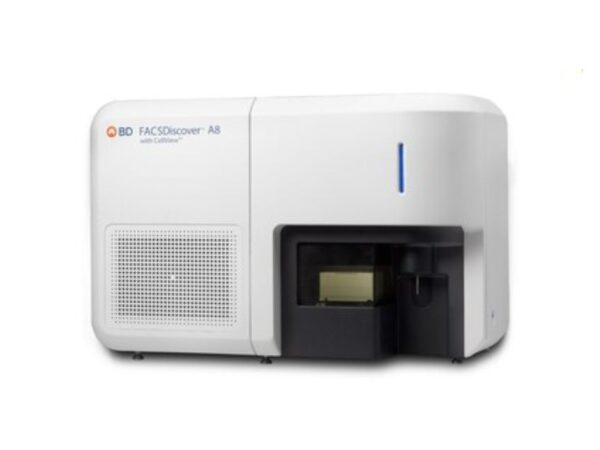
BD Biosciences BD FACSDiscover A8
BD FACSDiscover A8 merges SpectralFX spectral detection and CellView real-time imaging, enabling >50 cell features per run with intuitive software ...
-

BD Biosciences BD FACSPresto
BD FACSPresto simultaneously measures absolute CD4 count, CD4%, and hemoglobin in ~22 minutes using a simple cartridge-based workflow.
-

BD Biosciences BD LSRFortessa X-20
BD LSRFortessa X-20 can be customized with up to five lasers and detect up to 20 parameters, all within a space-saving benchtop footprint.
-
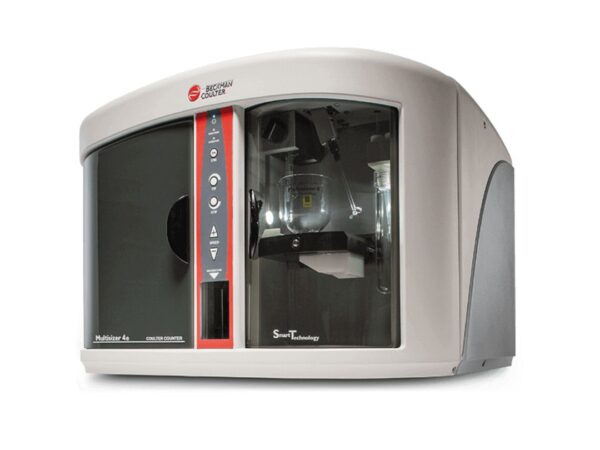
Beckman Coulter Multisizer 4e
Fast, versatile Coulter-principle particle counter for reliable measurements.
-
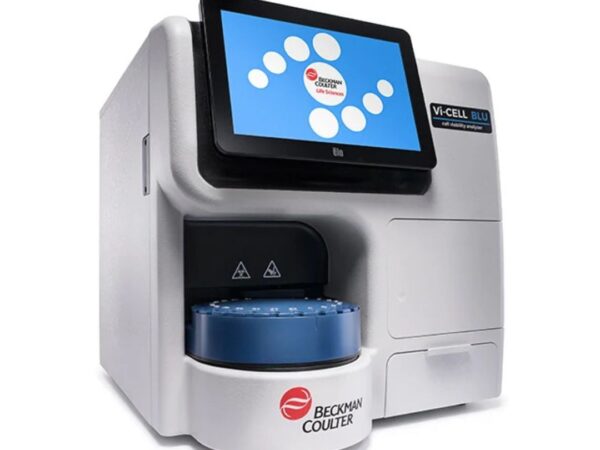
Beckman Coulter Vi-CELL BLU
Vi-CELL BLU automates viability counting with RFID reagents, audit trail, and secure electronic sign-on.
-

Beckman Coulter Vi-CELL MetaFLEX
Vi-CELL MetaFLEX measures pH, gases, glucose, lactate, and electrolytes with strong QC and high throughput performance.
-

BioRad TC20
The Bio-Rad TC20 Auto Cell Counter uses innovative autofocus and multifocal-plane image analysis to provide accurate total and viable cell counts (wit...
-
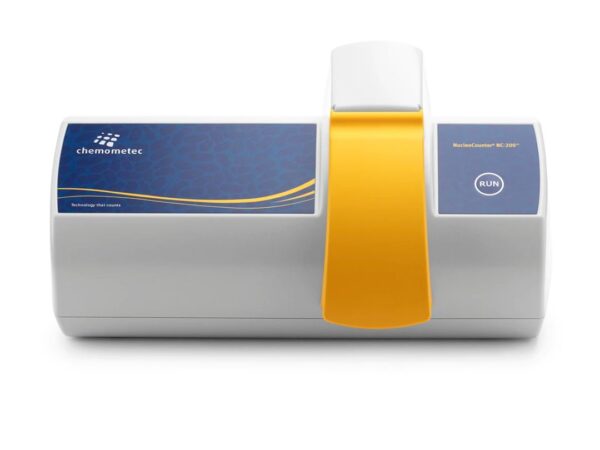
ChemoMetec NucleoCounter NC-200
The NC-200 automated cell counter simplifies routine laboratory workflows by providing consistent, precise cell counts and viability data with minimal...
-
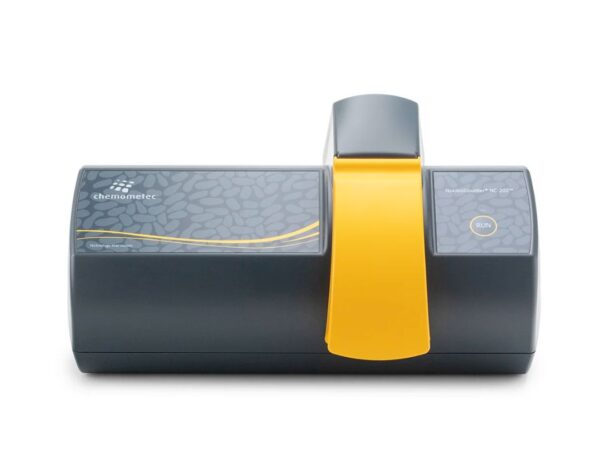
ChemoMetec NucleoCounter NC-202
The NC-202 automated cell counter offers high-speed counting with exceptional accuracy, simplifying workflows for routine laboratory applications and ...
-
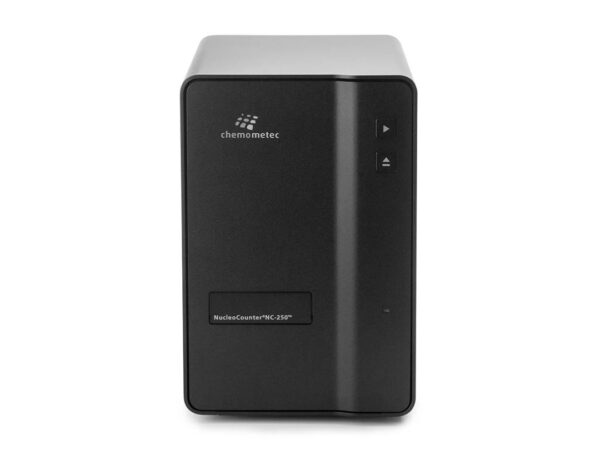
ChemoMetec NucleoCounter NC-250
The NC-250 is a compact, cost-effective image cytometer designed for accurate fluorescence-based assays and cellular analysis in research environments...
-

ChemoMetec NucleoCounter NC-3000
The NC-3000 combines high-resolution imaging and reliable cytometry for detailed cell characterization, supporting advanced research applications acro...