

Micro Centrifuges
Micro centrifuges: Isolate and Extract DNA and Protein Samples with Temperature Control
Microcentrifuge Overview: A Standard for the Modern Laboratory
Microcentrifuges are compact, high-speed instruments designed for the rapid separation of small liquid sample volumes in molecular biology, biochemistry, and clinical lab settings. Their primary application involves tasks such as nucleic acid extraction, protein precipitation, and pelleting of cellular debris. These centrifuges feature rapid acceleration and deceleration, ensuring efficient sample processing with minimal temperature fluctuations.
Microcentrifuges differ from standard centrifuges by utilizing smaller tubes, typically from 1.5 to 2 mL, and models supporting other micro-volume formats are available. A mini centrifuge is a smaller version often used for quick spins. Critical selection criteria include the operating temperature range, instrument size, rotational speed, and supported tube formats.
Key Features: What Defines an Advanced High Speed Micro Centrifuge with Temperature Control?
- A versatile benchtop micro centrifuge combines the functions of multiple instruments within a compact footprint of just over one foot of bench space. It can spin microcentrifuge tubes, PCR strips, microplates, and even 15 and 50 mL conical tubes, a capability previously restricted to larger instruments.
- These centrifuges deliver high-speed centrifugation up to 30,130 × g (17,500 RPM) and feature eight rotor options for a wide range of tube sizes. A programmable interface with a large backlit LCD display allows for precise parameter control and access to up to 50 stored protocols.
- The refrigerated version utilizes a rear-mounted compressor to maintain a compact design and low access height. It includes advanced cooling technologies for scheduled pre-cooling, an ECO shut-off function to conserve energy, and dynamic compressor control for precise temperature regulation.
- Low-noise operation and an automatic lid-opening feature enhance user comfort. An aerosol-tight rotor for 1.5 or 2.0 mL tubes, a quick-lock rotor lid, and a soft-touch closure support ergonomic handling. A rotary knob and clear digital display allow for fast parameter selection, along with an automatic RPM/RCF conversion function.
- A multi-flow air cooling system protects thermally sensitive sample materials. A SOFT-brake function safeguards fragile sample pellets, while a customizable end-of-run alarm minimizes noise.
Key Scientific Applications for Microcentrifuges
- DNA/RNA extraction: Microcentrifuges are used to isolate and purify nucleic acids by separating DNA or RNA from cellular debris and contaminants. The extracted genetic material is ready for analysis in any molecular biology lab.
- Protein assays: The instruments clarify protein sample preparations by removing insoluble materials before analysis, enabling accurate measurement of concentration and activity without interference.
- Sample concentration: They concentrate dilute solutions by spinning down solutes or biomolecules into a pellet, increasing the density for subsequent experiments.
- Cell pellet processing: They are routinely used to collect and wash cell pellets from suspension cultures, facilitating smooth handling for downstream molecular or biochemical procedures.
- Clinical diagnostics: This application involves separating plasma or serum from whole blood for various diagnostic tests, allowing small volumes to be processed quickly for timely results.
- Cell fractionation: They help isolate specific cellular components, such as nuclei, mitochondria, or other organelles, from cell suspensions. This enables researchers to study cell structure and function in detail.
- Molecular biology: Microcentrifuges assist in preparing DNA, RNA, and protein samples by removing debris and concentrating the material. This ensures high-quality samples for experiments like PCR, cloning, or sequencing.
- Cell biology research: Microcentrifuges are used to separate and collect cellular components, including organelles and proteins, from cell cultures. This allows detailed analysis of cellular processes and functions.
- Nanotechnology applications: They help isolate and concentrate nanoparticles or nanomaterials from suspensions, which ensures precise handling and measurement for experiments in nanomaterial synthesis and characterization.
Showing 1–12 of 38 results
Category
- Bioreactors+
- Parallel Bioreactors
- Single-Use Bioreactors
- Stirred-Tank Bioreactors
- Capillary Electrophoresis Instruments+
- Capillary Gel Electrophoresis (CGE)
- Capillary Isoelectric Focusing (CIEF)
- Capillary Zone Electrophoresis (CZE)
- Cell Counters and Analyzers+
- Automated Cell Counters
- Manual Cell Counters
- Cellular Imaging Systems+
- Fluorescence Imaging Systems
- High-Content Imaging Systems
- Live-Cell Imaging Systems
- Centrifuges+
- Benchtop Centrifuges
- Clinical Centrifuges
- Micro Centrifuges
- Refrigerated Centrifuges
- Ultracentrifuges
- Chromatography Instruments+
- Gas Chromatography
- Ion Chromatography
- Liquid Chromatography
- Flow Cytometer+
- Cell Analyzers
- Cell Isolation Systems
- Cell Sorters
- High-Throughput Flow Cytometers
- Imaging Flow Cytometry
- Personal Flow Cytometers
- Portable/Benchtop Flow Cytometers
- Spectral Flow Cytometers
- Laboratory Incubators+
- CO2 Incubators
- Dry Bath Incubators
- Hypoxia Incubators and Chambers
- Incubator Shakers
- Laboratory Ovens
- Portable Incubators
- Thermal Mixers
- Laboratory Microscopes+
- Atomic Force Microscopes (AFM)
- Automated Modular Microscopes
- Compound Microscopes
- Confocal Microscopes
- Digital Microscopes
- Fluorescence Microscopes
- Inverted Microscopes
- Live Cell Imaging Microscopes
- Metallurgical Microscopes
- Multiphoton Microscopes
- Polarizing Microscopes
- Raman Microscopes
- Scanning Electron Microscopes (SEM)
- Stereo Microscopes
- Super-Resolution Microscopes
- Transmission Electron Microscopes (TEM)
- Upright Microscopes (Neuroscience)
- Liquid Handlers+
- Automated Pipetting Systems
- Multi-Channel Liquid Handlers
- Robotic Liquid Handlers
- Variable Volume Pipetting Systems
- Mass Spectrometers+
- Ambient Ionization
- APCI MS
- ESI MS
- FT ICR MS
- ICP MS
- Orbi Trap MS
- Quadrupole MS
- Time-of-Flight MS
- Microarray Scanners+
- DNA Microarray Scanners
- Laser-Based Microarray Scanners
- Microplate Readers+
- Absorbance Microplate Readers
- Fluorescence Microplate Readers
- Luminescence Microplate Readers
- Multimode Microplate Readers
- Particle Counters and Analyzers+
- Airborne Particle Counters
- Laser Diffraction Analyzers
- Liquid Particle Counters
- Nanoparticle Analyzers
- Portable Particle Counters
- Remote Particle Counters
Brand
- ACCU-SCOPE
- Agilent
- Airmodus
- Alphasense
- Analytik Jena
- ARGO-HYTOS
- Arrayit
- Aurora Biomed Inc.
- Azure Biosystems
- Baker
- BD Biosciences
- Beckman Coulter
- Beijing Challen Biotechnology
- Binder
- Bio-Techne
- Biobase
- BioRad
- BMG Labtech
- Bruker
- Celestron
- Cellbox
- Centurion Scientific Ltd
- ChemoMetec
- CleanAir
- Cleatech
- Corning
- Countstar
- CS Instruments
- CUBIC
- Cytek Biosciences
- Cytena
- Cytiva
- Data Technologies
- Descase
- Electrolab Biotech
- Eppendorf
- Euromex
- Evident
- Fermex
- Fluke
- Formulatrix
- Getinge
- Gilson
- GPC Bio
- Haier Biomedical
- Hamilton Company
- Hettich
- Hitachi High-Tech
- Hudson Robotics Inc.
- Hydro
- INFORS HT
- Innopsys
- Jasco
- Jeiotech
- JEOL
- Kanomax
- Keyence
- KNAUER
- LAB-KITS
- Labomed
- Labwit
- Leco
- Leica
- Lighthouse
- Logos Biosystems
- LOSI
- Lumex Instruments
- Luminex
- Malvern Panalytical
- Meiji Techno
- Memmert
- Merck
- Mettler-Toledo International Inc.
- Miltenyi Biotec
- Molecular Devices
- Motic
- MP Filtri
- MSE (Medical and Scientific Equipment)
- NCI
- Nikon Instruments
- NuAire
- ORFLO Technologies
- Oxford Instruments
- PAMAS
- Particle Measuring Systems
- Particles Plus
- PBS Biotech
- PCE instruments
- PerkinElmer
- PharSol
- PHCbi
- Prior Scientific
- Promega
- Qiagen NV
- Revvity
- RION
- Sartorius
- SATAKE
- Sciex
- Sebia
- SETA
- Setra
- Shimadzu
- SIBATA
- Sigma Laborzentrifugen GmbH
- Solaris Biotech
- Solida Biotech
- Sony Biotechnology Inc.
- SPT Labtech Ltd
- Stratedigm Inc.
- Sysmex Corporation
- Tecan
- TES
- Thermo Fisher Scientific
- TSI
- Waters
- Western States Machine Company
- ZEISS
- ZETRON
-
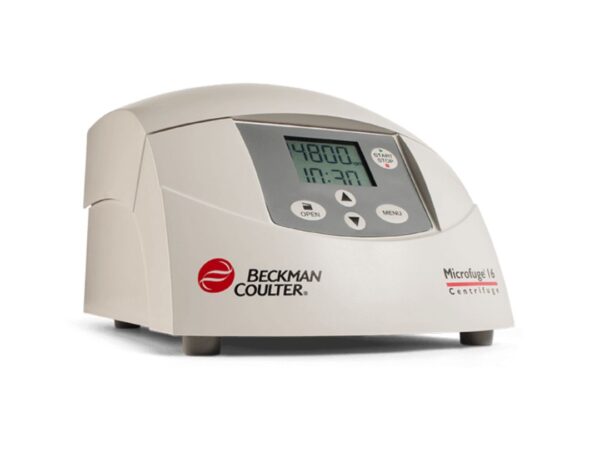
Beckman Coulter Microfuge 16 Mini Product No A58837
This Microfuge 16 ensures reliable centrifugation with safety lid lock, quiet operation, and ergonomic design for labs.
-
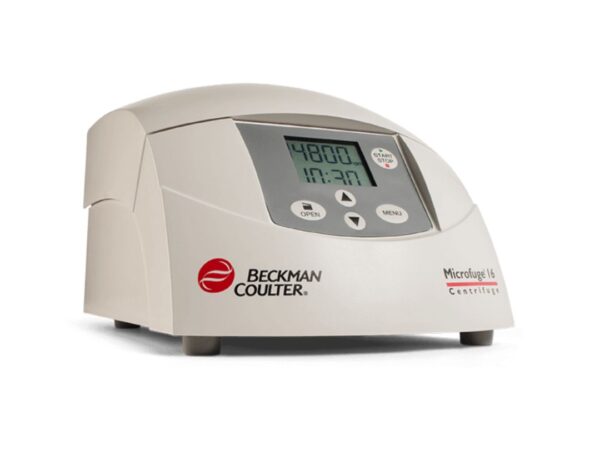
Beckman Coulter Microfuge 16 Product No A46471
The Microfuge 16 offers consistent centrifugation, easy controls, and durable construction for routine lab workflows.
-
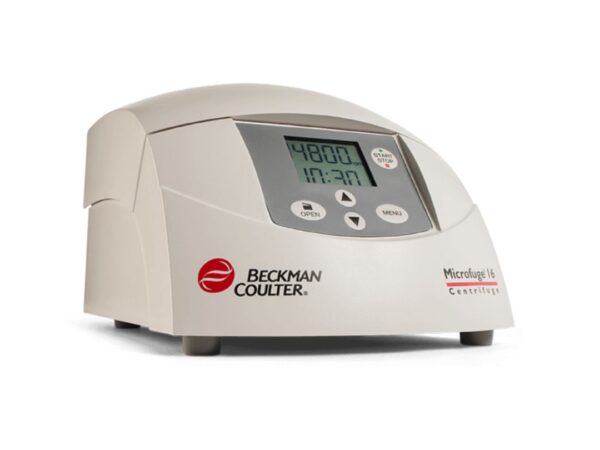
Beckman Coulter Microfuge 16 Product No A46473
The Microfuge 16 provides reliable performance and rotor flexibility for a wide range of laboratory centrifugation tasks.
-
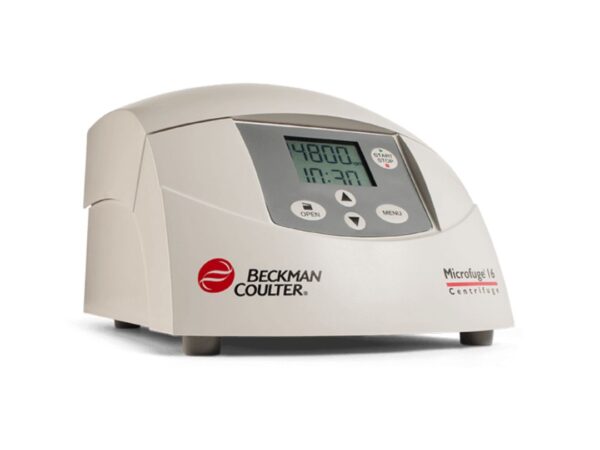
Beckman Coulter Microfuge 16 Product No A46474
Designed for durability, the Microfuge 16 offers consistent centrifugation and user-friendly features for lab environments.
-

Beckman Coulter Microfuge 20 Product No B30136
This general-purpose Microfuge 20 centrifuge offers reliable high-speed performance with a simple interface and multiple rotor compatibility.
-
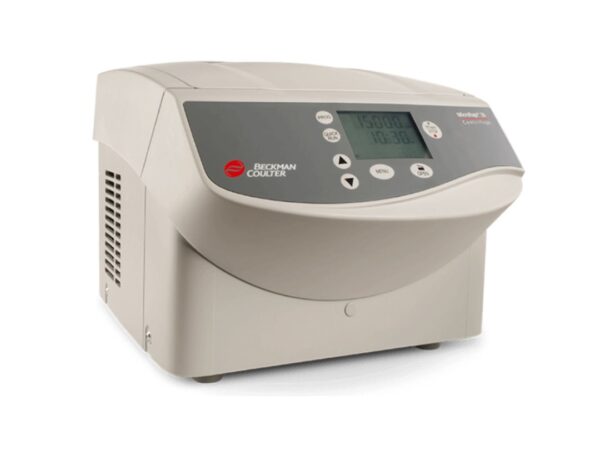
Beckman Coulter Microfuge 20 Product No B30137
Provides reliable swinging bucket centrifugation for varied sample types and laboratory protocols.
-
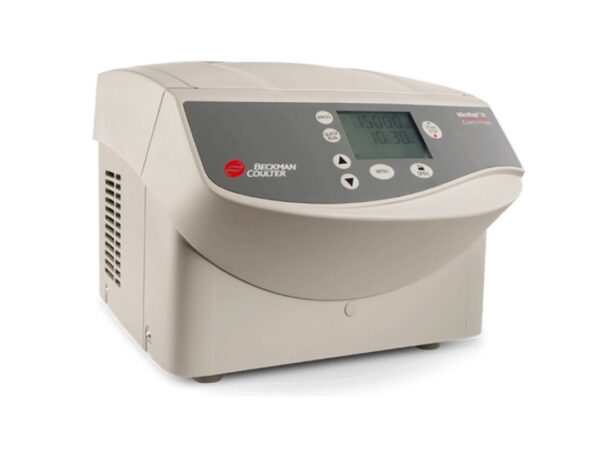
Beckman Coulter Microfuge 20 Product No B30139
The Microfuge 20 offers precise speed and timer controls with a compact design for versatile laboratory centrifugation tasks.
-

Beckman Coulter Microfuge 20 Product No B30142
Offers efficient centrifugation for mid-volume tubes with lightweight and corrosion-resistant design.
-

Beckman Coulter Microfuge 20 Product No B30143
This Microfuge 20 model ensures precision centrifugation with advanced speed controls, safety lid lock, and durable construction for extended use.
-

Beckman Coulter Microfuge 20 Product No B31603
Provides high-speed centrifugation for microfuge tubes with efficient and reliable performance.
-
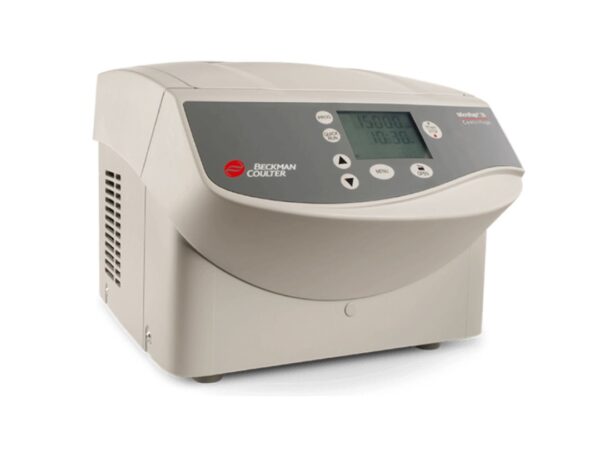
Beckman Coulter Microfuge 20 Product No B31604
Robust rotor for 5 mL tubes delivering balanced and efficient centrifugation for varied lab protocols.
-
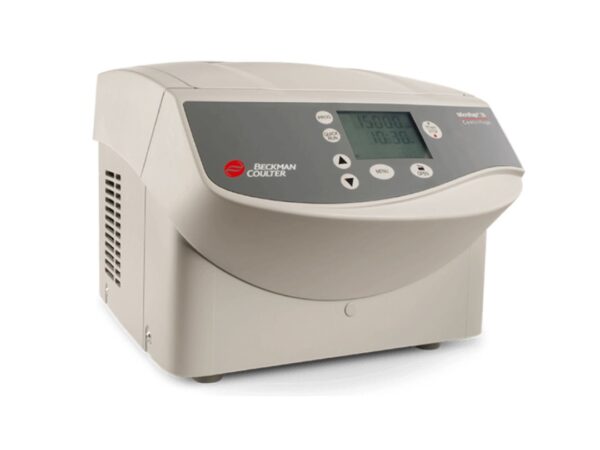
Beckman Coulter Microfuge 20 Product No B31605
Optimized for lab efficiency, this Microfuge 20 delivers reproducible results with ergonomic design and minimal maintenance required.