

Cell Analyzers - Flow Cytometers for Cell Analysis
Cell analyzers are instruments designed to measure and characterize physical and biological properties of cells, usually at the single-cell level. They provide detailed information such as size, shape, granularity, phenotype, and functional markers without necessarily separating or isolating the cells. A wide range of cell analysis systems is available to support critical studies in cell biology. A flow cytometer enables rapid and convenient assessment of cell counts and viability. Certain platforms are tailored for high-content screening, combining the imaging power of fluorescence microscopy with the throughput of plate readers. With integrated features such as environmental chambers and automated injectors, these systems facilitate dynamic live-cell studies. Multiplexing technologies further enhance efficiency by measuring multiple analytes simultaneously in minimal sample volumes. Together, these analyzers, imagers, and readers help boost productivity while ensuring consistent, reproducible results.read more
Key Features
- Equipped with up to five lasers and capable of measuring up to 30 parameters, the system enables complex, high-throughput sample analysis. This allows researchers to detect rare events, resolve small particles like exosomes, and generate more comprehensive data.
- The system supports complex immunophenotyping and advanced assays. It achieves acquisition rates of up to 100,000 events per second without data loss.
- The analyzer offers automated startup, cleaning, and quality control, making it suitable for multi-user labs with varying levels of expertise. It is also automation-ready with API integration for robotic workcells and supports 21 CFR Part 11 compliance for regulated workflows.
- The system features a small benchtop footprint and a touchscreen interface with guided workflows, making it easy to use in routine lab settings. Its pre-configured assay modules streamline experiments and reduce setup time.
- Equipped with a 488 nm laser and up to three fluorescence detectors, the analyzer provides accurate multiparameter cell analysis. It requires only minimal sample volumes (as low as 200 µL), enabling reliable results even with limited material.
- A real-time cell analyzer allows continuous, real-time monitoring of cell proliferation, morphology, and response to treatments. It is particularly useful for assessing drug effects or cytotoxicity in live cell populations, and a single-cell analyzer enables isolation and analysis of individual cells to study heterogeneity within a population.
- A live cell analyzer facilitates real-time imaging of live cells, capturing dynamic cellular processes such as migration, division, and intracellular signaling.
Applications
- Cell viability and apoptosis analysis: The system enables precise assessment of cell health by distinguishing live, dead, and apoptotic cells within a sample. This provides critical information for understanding cellular responses to treatments, toxins, or experimental conditions.
- Cell counting and concentration: Accurate cell counting and determination of sample concentration are essential for reproducible experiments and proper normalization across assays. The analyzer uses microcapillary technology to deliver absolute counts quickly and reliably, even with small sample volumes.
- Cell cycle and proliferation assays: The analyzer can track progression through different phases of the cell cycle and measure cell proliferation rates. This capability is vital for studies in cancer research, drug development, and understanding cellular growth dynamics.
- Basic immunophenotyping: The system allows identification of specific cell populations based on surface markers and fluorescence signals. This supports research in immunology, stem cell biology, and other fields requiring detailed population profiling.
- Educational and training use: Its intuitive touchscreen interface and guided workflows make it ideal for teaching laboratories and hands-on training. Students and trainees can learn flow cytometry principles while performing reliable, reproducible analyses.
- Microbial population studies and functional assays: The analyzer can be used to identify, quantify, and characterize microbial populations in mixed samples, providing insights into community composition and dynamics. It also supports functional assays, such as measuring metabolic activity or stress responses, enabling detailed studies of microbial physiology and interactions.
- Clinical research: Cell analyzers designed for regulated environments support 21 CFR Part 11 compliance, ensuring secure data handling, audit trails, and electronic signatures. This makes them suitable for clinical studies, preclinical testing, and other regulated workflows where data integrity and traceability are critical.
Showing all 2 results
Category
- Bioreactors+
- Parallel Bioreactors
- Single-Use Bioreactors
- Stirred-Tank Bioreactors
- Capillary Electrophoresis Instruments+
- Capillary Gel Electrophoresis (CGE)
- Capillary Isoelectric Focusing (CIEF)
- Capillary Zone Electrophoresis (CZE)
- Cell Counters and Analyzers+
- Automated Cell Counters
- Manual Cell Counters
- Cellular Imaging Systems+
- Fluorescence Imaging Systems
- High-Content Imaging Systems
- Live-Cell Imaging Systems
- Centrifuges+
- Benchtop Centrifuges
- Clinical Centrifuges
- Micro Centrifuges
- Refrigerated Centrifuges
- Ultracentrifuges
- Chromatography Instruments+
- Gas Chromatography
- Ion Chromatography
- Liquid Chromatography
- Flow Cytometer+
- Cell Analyzers
- Cell Isolation Systems
- Cell Sorters
- High-Throughput Flow Cytometers
- Imaging Flow Cytometry
- Personal Flow Cytometers
- Portable/Benchtop Flow Cytometers
- Spectral Flow Cytometers
- Laboratory Incubators+
- CO2 Incubators
- Dry Bath Incubators
- Hypoxia Incubators and Chambers
- Incubator Shakers
- Laboratory Ovens
- Portable Incubators
- Thermal Mixers
- Laboratory Microscopes+
- Atomic Force Microscopes (AFM)
- Automated Modular Microscopes
- Compound Microscopes
- Confocal Microscopes
- Digital Microscopes
- Fluorescence Microscopes
- Inverted Microscopes
- Live Cell Imaging Microscopes
- Metallurgical Microscopes
- Multiphoton Microscopes
- Polarizing Microscopes
- Raman Microscopes
- Scanning Electron Microscopes (SEM)
- Stereo Microscopes
- Super-Resolution Microscopes
- Transmission Electron Microscopes (TEM)
- Upright Microscopes (Neuroscience)
- Liquid Handlers+
- Automated Pipetting Systems
- Multi-Channel Liquid Handlers
- Robotic Liquid Handlers
- Variable Volume Pipetting Systems
- Mass Spectrometers+
- Ambient Ionization
- APCI MS
- ESI MS
- FT ICR MS
- ICP MS
- Orbi Trap MS
- Quadrupole MS
- Time-of-Flight MS
- Microarray Scanners+
- DNA Microarray Scanners
- Laser-Based Microarray Scanners
- Microplate Readers+
- Absorbance Microplate Readers
- Fluorescence Microplate Readers
- Luminescence Microplate Readers
- Multimode Microplate Readers
- Particle Counters and Analyzers+
- Airborne Particle Counters
- Laser Diffraction Analyzers
- Liquid Particle Counters
- Nanoparticle Analyzers
- Portable Particle Counters
- Remote Particle Counters
Brand
- ACCU-SCOPE
- Agilent
- Airmodus
- Alphasense
- Analytik Jena
- ARGO-HYTOS
- Arrayit
- Aurora Biomed Inc.
- Azure Biosystems
- Baker
- BD Biosciences
- Beckman Coulter
- Beijing Challen Biotechnology
- Binder
- Bio-Techne
- Biobase
- BioRad
- BMG Labtech
- Bruker
- Celestron
- Cellbox
- Centurion Scientific Ltd
- ChemoMetec
- CleanAir
- Cleatech
- Corning
- Countstar
- CS Instruments
- CUBIC
- Cytek Biosciences
- Cytena
- Cytiva
- Data Technologies
- Descase
- Electrolab Biotech
- Eppendorf
- Euromex
- Evident
- Fermex
- Fluke
- Formulatrix
- Getinge
- Gilson
- GPC Bio
- Haier Biomedical
- Hamilton Company
- Hettich
- Hitachi High-Tech
- Hudson Robotics Inc.
- Hydro
- INFORS HT
- Innopsys
- Jasco
- Jeiotech
- JEOL
- Kanomax
- Keyence
- KNAUER
- LAB-KITS
- Labomed
- Labwit
- Leco
- Leica
- Lighthouse
- Logos Biosystems
- LOSI
- Lumex Instruments
- Luminex
- Malvern Panalytical
- Meiji Techno
- Memmert
- Merck
- Mettler-Toledo International Inc.
- Miltenyi Biotec
- Molecular Devices
- Motic
- MP Filtri
- MSE (Medical and Scientific Equipment)
- NCI
- Nikon Instruments
- NuAire
- ORFLO Technologies
- Oxford Instruments
- PAMAS
- Particle Measuring Systems
- Particles Plus
- PBS Biotech
- PCE instruments
- PerkinElmer
- PharSol
- PHCbi
- Prior Scientific
- Promega
- Qiagen NV
- Revvity
- RION
- Sartorius
- SATAKE
- Sciex
- Sebia
- SETA
- Setra
- Shimadzu
- SIBATA
- Sigma Laborzentrifugen GmbH
- Solaris Biotech
- Solida Biotech
- Sony Biotechnology Inc.
- SPT Labtech Ltd
- Stratedigm Inc.
- Sysmex Corporation
- Tecan
- TES
- Thermo Fisher Scientific
- TSI
- Waters
- Western States Machine Company
- ZEISS
- ZETRON
-
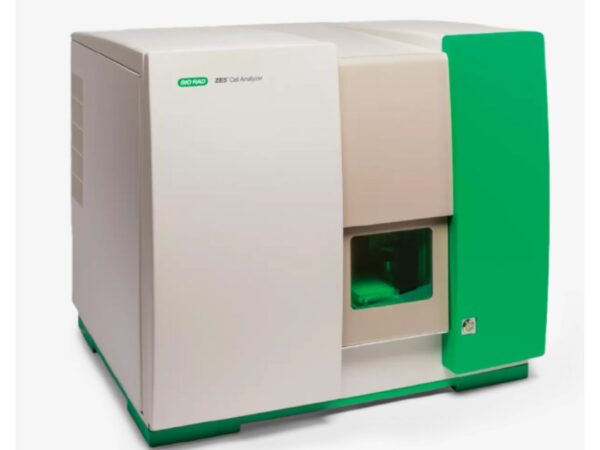
BioRad ZE5 Cell Analyzer
The ZE5 Cell Analyzer is a high-performance, automation-ready flow cytometer with flexible configurations, enabling complex assays and high-throughput...
-
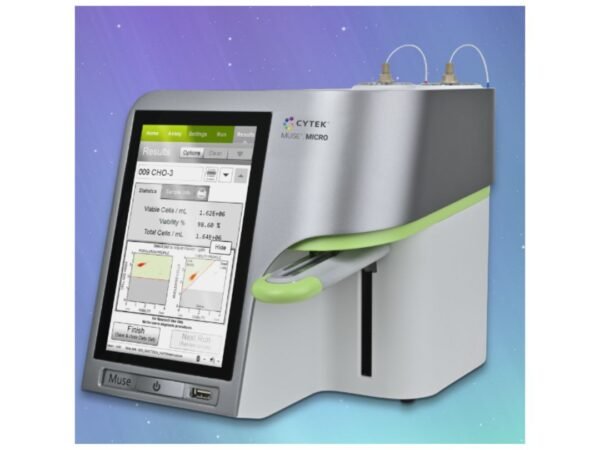
Cytek Biosciences Cytek® Muse® Micro Cell Analyzer
Muse Micro simplifies everyday flow cytometry with preloaded assays and intuitive software.