

High-Throughput Flow Cytometers
High-throughput flow cytometers are advanced instruments designed to analyze large numbers of cells rapidly and efficiently, often exceeding tens of thousands of events per second. They combine the principles of traditional flow cytometry with enhanced fluidics, optics, and data acquisition systems to support large-scale screening applications. A high-throughput flow cytometer works by passing cells in a fluid stream through focused lasers, where detectors measure multiple parameters such as size, granularity, and fluorescence. Advanced optics, fluidics, and software then capture, unmix, and analyze this multiparametric data rapidly, enabling large-scale, automated cell analysis. High-throughput platforms are particularly useful in drug discovery, immunophenotyping, and systems biology studies, where analyzing millions of cells is essential. Many models integrate automated sample handling and plate-based formats, minimizing manual intervention and improving reproducibility.read more
Key Features of High-Throughput Flow Cytometry
- The high-throughput flow cytometry platform is designed for rapid sample-to-result workflows, enabling users to acquire and analyze biologically relevant, multiplexed data from miniaturized assays much faster than traditional instruments. Its intuitive software and automation capabilities streamline multi-parametric data visualization and interpretation, reducing analysis time from days to minutes.
- This clinical-grade spectral flow cytometer is designed for diagnostic and clinical research applications, offering full-spectrum detection, signal unmixing, and integrated quality control with audit trails. It supports clinical assay development and is compatible with laboratory information system integration for streamlined workflow and compliance.
- The compact spectral flow cytometer is suitable for both routine and advanced applications, offering up to three laser options and full-spectrum optics for versatile analysis. Its space-saving design and intuitive software enable scalable performance, making it ideal for core laboratory use.
High-Throughput Screening Cytometry Applications
- Clinical diagnostics: High-throughput flow cytometers enable rapid and accurate analysis of patient samples for disease detection and monitoring. They support the processing of large sample volumes while maintaining clinical-grade precision.
- Immunophenotyping for disease monitoring: The cytometers can characterize immune cell populations in detail, allowing for ongoing monitoring of disease progression or treatment response. Multiparametric analysis ensures comprehensive profiling of immune status.
- Translational research: High-throughput platforms accelerate the translation of laboratory findings into clinical insights by providing fast, reliable cellular data. They facilitate large-scale studies across diverse patient cohorts.
- Standardized assay deployment: The instruments allow for consistent, reproducible execution of complex assays across multiple plates and experiments. Automation of high-throughput flow cytometry and software integration minimize variability and human error.
- Clinical trial biomarker testing: High-throughput screening flow cytometers support biomarker discovery and validation in clinical trials by enabling multiplexed analysis of immune and cellular responses. Their speed and scalability allow for efficient processing of large trial sample sets.
- Fluorescent protein detection: High-throughput flow cytometers can accurately detect and quantify fluorescent proteins in individual cells, enabling detailed studies of gene expression and protein localization. Their multiparametric capabilities allow simultaneous analysis of multiple fluorescent markers in a single experiment.
- Academic research labs: The instruments are well-suited for academic research, providing rapid, reproducible data for studies in immunology, cell biology, and molecular biology. Their scalability and automation support high-volume experiments while reducing manual workload.
- Drug screening: High-throughput flow cytometers accelerate drug discovery by enabling rapid evaluation of compound effects on large cell populations. They allow simultaneous assessment of multiple cellular parameters, providing detailed insights into drug efficacy and mechanism of action.
- Cell viability testing: The instruments can efficiently assess cell health and survival across thousands of samples, providing reliable data for toxicology and pharmacology studies. Multiparametric analysis ensures accurate discrimination between live, dead, and apoptotic cells.
- Phenotypic assays: High-throughput cytometers facilitate detailed characterization of cellular phenotypes, including surface marker expression and functional responses. This enables researchers to study complex biological processes at the single-cell level.
- High-content screening: The platforms support large-scale, multiparametric screening of cells, combining quantitative data with spatial and morphological information. They are ideal for identifying subtle changes in cellular behavior across diverse experimental conditions.
Showing all 5 results
Category
- Bioreactors+
- Parallel Bioreactors
- Single-Use Bioreactors
- Stirred-Tank Bioreactors
- Capillary Electrophoresis Instruments+
- Capillary Gel Electrophoresis (CGE)
- Capillary Isoelectric Focusing (CIEF)
- Capillary Zone Electrophoresis (CZE)
- Cell Counters and Analyzers+
- Automated Cell Counters
- Manual Cell Counters
- Cellular Imaging Systems+
- Fluorescence Imaging Systems
- High-Content Imaging Systems
- Live-Cell Imaging Systems
- Centrifuges+
- Benchtop Centrifuges
- Clinical Centrifuges
- Micro Centrifuges
- Refrigerated Centrifuges
- Ultracentrifuges
- Chromatography Instruments+
- Gas Chromatography
- Ion Chromatography
- Liquid Chromatography
- Flow Cytometer+
- Cell Analyzers
- Cell Isolation Systems
- Cell Sorters
- High-Throughput Flow Cytometers
- Imaging Flow Cytometry
- Personal Flow Cytometers
- Portable/Benchtop Flow Cytometers
- Spectral Flow Cytometers
- Laboratory Incubators+
- CO2 Incubators
- Dry Bath Incubators
- Hypoxia Incubators and Chambers
- Incubator Shakers
- Laboratory Ovens
- Portable Incubators
- Thermal Mixers
- Laboratory Microscopes+
- Atomic Force Microscopes (AFM)
- Automated Modular Microscopes
- Compound Microscopes
- Confocal Microscopes
- Digital Microscopes
- Fluorescence Microscopes
- Inverted Microscopes
- Live Cell Imaging Microscopes
- Metallurgical Microscopes
- Multiphoton Microscopes
- Polarizing Microscopes
- Raman Microscopes
- Scanning Electron Microscopes (SEM)
- Stereo Microscopes
- Super-Resolution Microscopes
- Transmission Electron Microscopes (TEM)
- Upright Microscopes (Neuroscience)
- Liquid Handlers+
- Automated Pipetting Systems
- Multi-Channel Liquid Handlers
- Robotic Liquid Handlers
- Variable Volume Pipetting Systems
- Mass Spectrometers+
- Ambient Ionization
- APCI MS
- ESI MS
- FT ICR MS
- ICP MS
- Orbi Trap MS
- Quadrupole MS
- Time-of-Flight MS
- Microarray Scanners+
- DNA Microarray Scanners
- Laser-Based Microarray Scanners
- Microplate Readers+
- Absorbance Microplate Readers
- Fluorescence Microplate Readers
- Luminescence Microplate Readers
- Multimode Microplate Readers
- Particle Counters and Analyzers+
- Airborne Particle Counters
- Laser Diffraction Analyzers
- Liquid Particle Counters
- Nanoparticle Analyzers
- Portable Particle Counters
- Remote Particle Counters
Brand
- ACCU-SCOPE
- Agilent
- Airmodus
- Alphasense
- Analytik Jena
- ARGO-HYTOS
- Arrayit
- Aurora Biomed Inc.
- Azure Biosystems
- Baker
- BD Biosciences
- Beckman Coulter
- Beijing Challen Biotechnology
- Binder
- Bio-Techne
- Biobase
- BioRad
- BMG Labtech
- Bruker
- Celestron
- Cellbox
- Centurion Scientific Ltd
- ChemoMetec
- CleanAir
- Cleatech
- Corning
- Countstar
- CS Instruments
- CUBIC
- Cytek Biosciences
- Cytena
- Cytiva
- Data Technologies
- Descase
- Electrolab Biotech
- Eppendorf
- Euromex
- Evident
- Fermex
- Fluke
- Formulatrix
- Getinge
- Gilson
- GPC Bio
- Haier Biomedical
- Hamilton Company
- Hettich
- Hitachi High-Tech
- Hudson Robotics Inc.
- Hydro
- INFORS HT
- Innopsys
- Jasco
- Jeiotech
- JEOL
- Kanomax
- Keyence
- KNAUER
- LAB-KITS
- Labomed
- Labwit
- Leco
- Leica
- Lighthouse
- Logos Biosystems
- LOSI
- Lumex Instruments
- Luminex
- Malvern Panalytical
- Meiji Techno
- Memmert
- Merck
- Mettler-Toledo International Inc.
- Miltenyi Biotec
- Molecular Devices
- Motic
- MP Filtri
- MSE (Medical and Scientific Equipment)
- NCI
- Nikon Instruments
- NuAire
- ORFLO Technologies
- Oxford Instruments
- PAMAS
- Particle Measuring Systems
- Particles Plus
- PBS Biotech
- PCE instruments
- PerkinElmer
- PharSol
- PHCbi
- Prior Scientific
- Promega
- Qiagen NV
- Revvity
- RION
- Sartorius
- SATAKE
- Sciex
- Sebia
- SETA
- Setra
- Shimadzu
- SIBATA
- Sigma Laborzentrifugen GmbH
- Solaris Biotech
- Solida Biotech
- Sony Biotechnology Inc.
- SPT Labtech Ltd
- Stratedigm Inc.
- Sysmex Corporation
- Tecan
- TES
- Thermo Fisher Scientific
- TSI
- Waters
- Western States Machine Company
- ZEISS
- ZETRON
-

Cytek Biosciences Cytek® Northern Lights-CLC
NL-CLC integrates spectral cytometry with features for clinical and regulated environments.
-

Cytek Biosciences Cytek® Northern Lights™
Cytek Northern Lights provides flexible 1–3 laser configurations and full-spectrum capability.
-
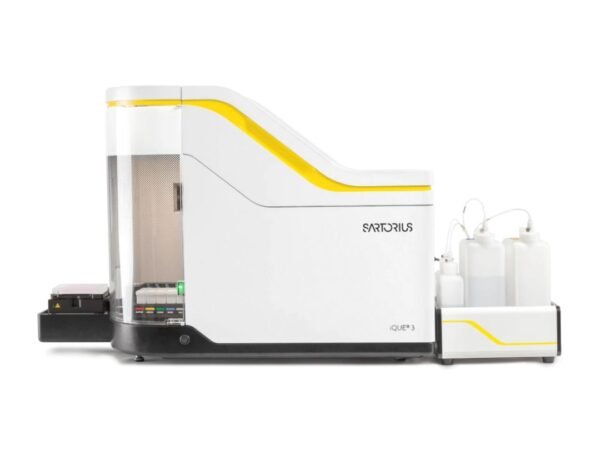
Sartorius High-Throughput Screening (HTS) by Cytometry-iQue® 3 Blue-Red (BR) Catalog no-91375, 91381 (HD)
Sartorius cytometry instruments deliver rapid, multiparameter cell analysis for drug discovery and research.
-
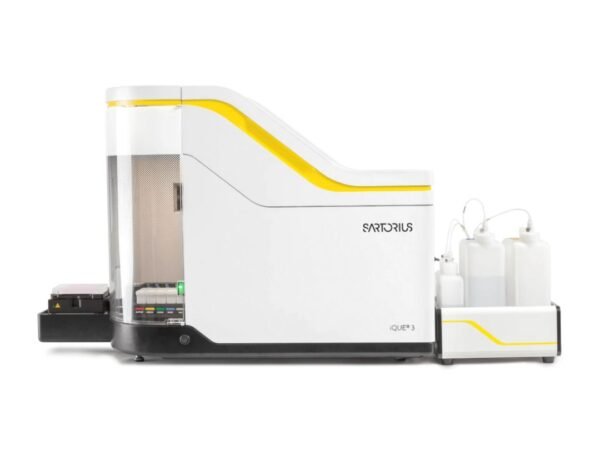
Sartorius High-Throughput Screening (HTS) by Cytometry-iQue® 3 Violet-Blue-Red (VBR) Catalog no-91377
Sartorius cytometry instruments deliver rapid, multiparameter cell analysis for drug discovery and research.
-
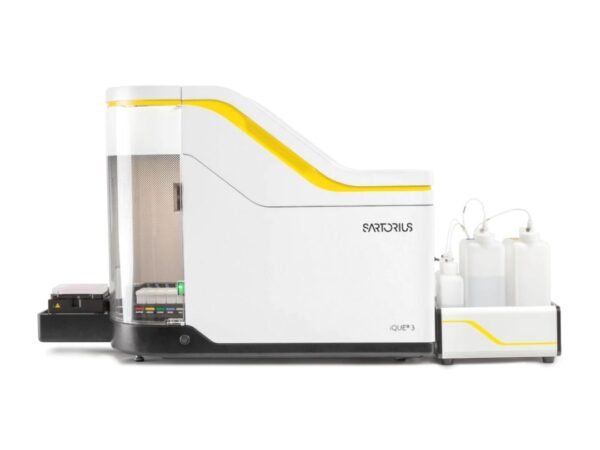
Sartorius High-Throughput Screening (HTS) by Cytometry-iQue® 3 Violet-Yellow-Blue (VYB) Catalog no-91379
Sartorius cytometry instruments deliver rapid, multiparameter cell analysis for drug discovery and research.