

Ambient Ionization
Ambient ionization is a mass spectrometry approach that allows samples to be examined directly in their natural state, eliminating the need for extensive preparation. It improves the rapidity, sensitivity, and overall efficiency of chemical analysis. Ambient ionization mass spectrometry methods are generally categorized into three main groups:read more
- Solid-liquid extraction approaches
- Plasma-based methods
- Laser ablation techniques
Since the introduction of desorption electrospray ionization (DESI) and direct analysis in real time (DART), the field of ambient ionization mass spectrometry has grown rapidly, driven by the ability to achieve selective analyte desorption and ionization under ambient conditions. This has resulted in the development of diverse analytical techniques for both quantitative and qualitative applications across multiple disciplines.
Essential Features
- Optimized elemental analysis systems ensure enhanced detection, seamless integration with GC workflows, and deliver precise, reliable, and accurate results.
- The compact, single quadrupole mass spectrometry systems combine ambient ionization with the atmospheric pressure solids analysis probe to deliver rapid, real-time analysis of liquids and solids in just 30 seconds. They require minimal sample preparation, no chromatography, and little training. This makes them an easy-to-use, low-cost solution for laboratories seeking high-quality data, streamlined workflows, and faster turnaround times.
- The advanced atmospheric pressure gas chromatography ionization source seamlessly integrates GC with modern mass spectrometry platforms. It provides ultra-trace quantification, high-resolution ion-mobility separations, and comprehensive qualitative and quantitative analysis with minimal fragmentation for improved sensitivity and specificity. Unique technologies and rapid changeover maximize instrument utilization and support both routine workflows and advanced research.
- Matrix-assisted laser desorption ionization (MALDI) mass spectrometry imaging technology enables high-resolution, information-rich molecular visualization directly from tissue or other matrix-coated samples. It provides simultaneous spatial mapping of diverse analytes such as peptides, lipids, glycans, and metabolites with excellent mass accuracy and minimal oversampling. MALDI is also compatible with complementary techniques like DESI, offering comprehensive full-spectrum molecular imaging.
- The multi-mode source for gas chromatography-mass spectrometry unifies electron ionization, positive chemical ionization, and negative chemical ionization within a single, seamlessly integrated platform. It delivers enhanced sensitivity, versatility, and reproducibility for complex sample analysis without the need for hardware changes or realignment.
Applications
- Disease diagnostics: Ambient ionization techniques enable rapid, high-throughput, and minimally invasive analysis of biological samples such as tissue, serum, plasma, saliva, exhaled breath, and even face mask aerosols. They facilitate the identification of disease-specific metabolites and lipids (e.g., phosphatidylcholines (PCs), phosphatidylethanolamines (PEs), triglycerides (TGs), and ceramides) and differentiation between healthy, premalignant, and malignant states. These approaches support early-stage disease detection, prognostication, and real-time monitoring of conditions ranging from cancers (breast, pancreatic, cervical, oral, renal) to viral infections like COVID-19.
- Drug monitoring: The method helps in precise monitoring of therapeutic agents with narrow windows (e.g., anti-arrhythmic drugs, abiraterone, triazole antifungals, tricyclic antidepressants), ensuring individualized dosing, patient adherence, and early detection of overdose. These approaches also extend to anti-doping applications in sports, allowing for the rapid detection of prohibited performance-enhancing compounds, including meldonium, metformin, tramadol, clenbuterol, trenbolone, and diuretics, directly from raw biological samples with limits of detection at sub-ng/mL levels.
- Forensics and security: Ambient ionization provides rapid, minimally destructive analysis of trace evidence, including illicit drugs, body fluids, toxic compounds, and counterfeit materials. It supports on-site identification of controlled substances, confirmation of human or animal blood, detection of drugs and metabolites in biofluids, and rapid species determination in forensic entomology with high sensitivity and specificity. Additionally, it facilitates the authentication of high-value goods, detection of explosives and chemical warfare agents, and analysis of adulterated documents or beverages, providing law enforcement and security agencies with fast, accurate, and non-invasive tools.
- Food and agriculture: The method supports the detection of contaminants, adulterants, pesticides, and toxic residues in products such as fruits, vegetables, meat, dairy, and packaging materials, as well as the profiling of metabolites, flavor compounds, amino acids, and antioxidants to ensure safety, nutritional quality, and regulatory compliance. Additionally, AIMS facilitates food authentication and fraud detection by differentiating between species, product origins, or adulterated ingredients, such as milk, fish, honey, and olive oil, through multivariate analysis of mass spectral profiles.
- Environmental monitoring: The ionization technique enables the detection and quantification of contaminants such as steroids, polycyclic hydrocarbons, organophosphorus pesticides, cyanobacterial anatoxins, phthalic acid esters, microplastics, PFAS, and insecticides in water, soil, vegetation, and living organisms. It also facilitates the monitoring of airborne particulate matter and toxic metals, thereby improving the frequency, efficiency, and accuracy of environmental monitoring without the need for extensive sample preparation or laboratory-based analysis.
- Single-cell analysis: Ambient ionization allows rapid, minimally invasive analysis of individual cells, detecting metabolites, lipids, proteins, and neurotransmitters with high sensitivity and spatial resolution. It enables classification of cell subpopulations, real-time monitoring of cellular metabolism, and on-site metabolomic studies in live plant and animal cells.
- Complex biological material analysis: The method provides rapid, preparation-free analysis of complex biological materials, from microbes to plant and animal tissues. It supports high-throughput bacterial strain identification, single- and multicellular metabolomics, tissue imaging, and the detection of pharmaceutical residues, while also offering spatial resolution and insights into food safety.
- Real-time reaction monitoring: Ambient ionization mass spectrometry analyzes chemical and enzymatic reactions, including nucleophilic substitutions, N-alkylation, hydroxymethylation, photocatalytic processes, and thermally driven reactions. It reveals previously undetected species and enables rapid quantification without extensive sample preparation.
- Diverse applications: The technique has been applied across a wide spectrum of fields, including rapid polymer and petroleum analysis, fuel authentication, detection of additives in gasoline, and monitoring of parabens and PFCAs in consumer products and textiles. It has also supported the development of portable, user-friendly devices for on-site analysis, collectively demonstrating versatility for industrial, environmental, and consumer safety applications.
Showing all 5 results
Category
- Bioreactors+
- Parallel Bioreactors
- Single-Use Bioreactors
- Stirred-Tank Bioreactors
- Capillary Electrophoresis Instruments+
- Capillary Gel Electrophoresis (CGE)
- Capillary Isoelectric Focusing (CIEF)
- Capillary Zone Electrophoresis (CZE)
- Cell Counters and Analyzers+
- Automated Cell Counters
- Manual Cell Counters
- Cellular Imaging Systems+
- Fluorescence Imaging Systems
- High-Content Imaging Systems
- Live-Cell Imaging Systems
- Centrifuges+
- Benchtop Centrifuges
- Clinical Centrifuges
- Micro Centrifuges
- Refrigerated Centrifuges
- Ultracentrifuges
- Chromatography Instruments+
- Gas Chromatography
- Ion Chromatography
- Liquid Chromatography
- Flow Cytometer+
- Cell Analyzers
- Cell Isolation Systems
- Cell Sorters
- High-Throughput Flow Cytometers
- Imaging Flow Cytometry
- Personal Flow Cytometers
- Portable/Benchtop Flow Cytometers
- Spectral Flow Cytometers
- Laboratory Incubators+
- CO2 Incubators
- Dry Bath Incubators
- Hypoxia Incubators and Chambers
- Incubator Shakers
- Laboratory Ovens
- Portable Incubators
- Thermal Mixers
- Laboratory Microscopes+
- Atomic Force Microscopes (AFM)
- Automated Modular Microscopes
- Compound Microscopes
- Confocal Microscopes
- Digital Microscopes
- Fluorescence Microscopes
- Inverted Microscopes
- Live Cell Imaging Microscopes
- Metallurgical Microscopes
- Multiphoton Microscopes
- Polarizing Microscopes
- Raman Microscopes
- Scanning Electron Microscopes (SEM)
- Stereo Microscopes
- Super-Resolution Microscopes
- Transmission Electron Microscopes (TEM)
- Upright Microscopes (Neuroscience)
- Liquid Handlers+
- Automated Pipetting Systems
- Multi-Channel Liquid Handlers
- Robotic Liquid Handlers
- Variable Volume Pipetting Systems
- Mass Spectrometers+
- Ambient Ionization
- APCI MS
- ESI MS
- FT ICR MS
- ICP MS
- Orbi Trap MS
- Quadrupole MS
- Time-of-Flight MS
- Microarray Scanners+
- DNA Microarray Scanners
- Laser-Based Microarray Scanners
- Microplate Readers+
- Absorbance Microplate Readers
- Fluorescence Microplate Readers
- Luminescence Microplate Readers
- Multimode Microplate Readers
- Particle Counters and Analyzers+
- Airborne Particle Counters
- Laser Diffraction Analyzers
- Liquid Particle Counters
- Nanoparticle Analyzers
- Portable Particle Counters
- Remote Particle Counters
Brand
- ACCU-SCOPE
- Agilent
- Airmodus
- Alphasense
- Analytik Jena
- ARGO-HYTOS
- Arrayit
- Aurora Biomed Inc.
- Azure Biosystems
- Baker
- BD Biosciences
- Beckman Coulter
- Beijing Challen Biotechnology
- Binder
- Bio-Techne
- Biobase
- BioRad
- BMG Labtech
- Bruker
- Celestron
- Cellbox
- Centurion Scientific Ltd
- ChemoMetec
- CleanAir
- Cleatech
- Corning
- Countstar
- CS Instruments
- CUBIC
- Cytek Biosciences
- Cytena
- Cytiva
- Data Technologies
- Descase
- Electrolab Biotech
- Eppendorf
- Euromex
- Evident
- Fermex
- Fluke
- Formulatrix
- Getinge
- Gilson
- GPC Bio
- Haier Biomedical
- Hamilton Company
- Hettich
- Hitachi High-Tech
- Hudson Robotics Inc.
- Hydro
- INFORS HT
- Innopsys
- Jasco
- Jeiotech
- JEOL
- Kanomax
- Keyence
- KNAUER
- LAB-KITS
- Labomed
- Labwit
- Leco
- Leica
- Lighthouse
- Logos Biosystems
- LOSI
- Lumex Instruments
- Luminex
- Malvern Panalytical
- Meiji Techno
- Memmert
- Merck
- Mettler-Toledo International Inc.
- Miltenyi Biotec
- Molecular Devices
- Motic
- MP Filtri
- MSE (Medical and Scientific Equipment)
- NCI
- Nikon Instruments
- NuAire
- ORFLO Technologies
- Oxford Instruments
- PAMAS
- Particle Measuring Systems
- Particles Plus
- PBS Biotech
- PCE instruments
- PerkinElmer
- PharSol
- PHCbi
- Prior Scientific
- Promega
- Qiagen NV
- Revvity
- RION
- Sartorius
- SATAKE
- Sciex
- Sebia
- SETA
- Setra
- Shimadzu
- SIBATA
- Sigma Laborzentrifugen GmbH
- Solaris Biotech
- Solida Biotech
- Sony Biotechnology Inc.
- SPT Labtech Ltd
- Stratedigm Inc.
- Sysmex Corporation
- Tecan
- TES
- Thermo Fisher Scientific
- TSI
- Waters
- Western States Machine Company
- ZEISS
- ZETRON
-

Shimadzu ELEM-SPOT™
The Shimadzu ELEM-SPOT™ is an application-specific system designed to improve the accuracy and reliability of elemental analysis in various industri...
-
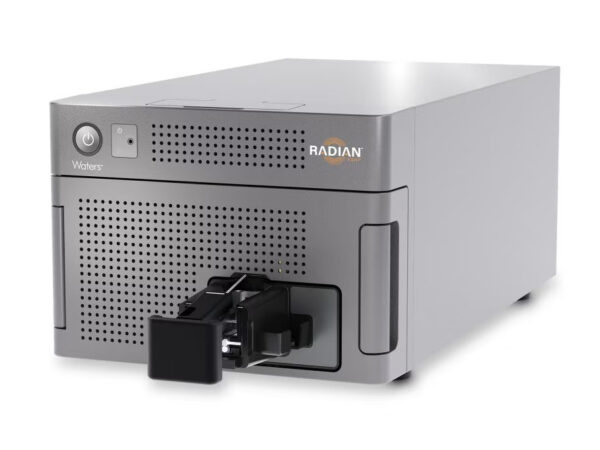
Waters RADIAN ASAP Direct Mass Detector
Radian ASAP Mass Detector provides rapid, direct analysis with ambient ionization, reducing sample preparation time.
-
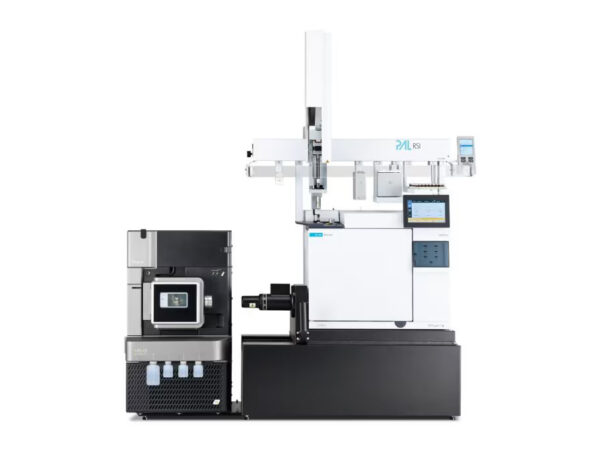
Waters Atmospheric Pressure Gas Chromatography (APGC) Source
Atmospheric pressure gas chromatography (APGC) source enhances GC-MS performance by enabling high-sensitivity and efficient analysis of volatile and s...
-

Waters MALDI – Matrix Assisted Laser Desorption Ionization
The MALDI system enables high-resolution mass spectrometry for direct sample analysis, supporting various applications including biomolecule character...
-

Leco Multi-Mode Source
Versatile ionization source supporting EI, CI, and FI modes for enhanced MS analysis.