

Electrospray Ionization Mass Spectrometry Technique - ESI-MS
Electrospray ionization mass spectrometry (ESI-MS) employs “soft” ionization. In this approach, analytes are introduced into the instrument as a fine aerosol, often after chromatographic separation using techniques such as conventional LC, HPLC, or nano-LC. At the electrospray source, the sample is charged at the nozzle tip, generating ionized droplets. As the solvent evaporates, increasing electrostatic repulsion between similarly charged species causes them to separate into free ions. These ions can then be directed into various types of mass analyzers for detection and characterization. The analyzers used include ion traps, time-of-flight, quadrupoles, and Fourier transform-based instruments.read more
Key Features of Electrospray Ionization Mass Spectrometry
- The ability of ESI to generate multiply charged ions enhances the sensitivity of mass spectrometry, enabling the accurate detection of large biomolecules with minimal fragmentation.
- With its high-pressure dispensing capability, enhanced precision, durable design, and optimization for high-throughput workflows, the system ensures accurate liquid handling and reliable lab performance.
- The instrument combines dual-source technology with high-performance analytical capabilities.
- The electrospray ionization mass spectrometer offers high sensitivity for low-level detection, robust and reliable performance, and high-throughput capabilities, all within a compact design supported by an intuitive software interface for streamlined operation in complex analytical tasks.
- The system delivers accurate mass measurements (m/z 50–4000) with a resolution of 60,000, supporting multiple fragmentation techniques such as pulsed-Q dissociation (PQD) and collision-induced dissociation (CID) for reliable structural elucidation. Using an ESI source, it enables precise molecular weight determination with minimal sample volume.
- With advanced ion focusing, ultrafast technologies, and a robust, low-maintenance design, the system ensures trace-level quantitative detection, high data quality, and long-term performance even with complex biological or food samples. Offering ultrafast scan speeds, rapid polarity switching, flexible ionization modes, and intuitive software with enhanced MRM optimization and streamlined data review, it delivers reproducibility and ease of use.
Applications of ESI-MS
- Clinical applications: ESI-MS is increasingly important in clinical laboratories due to its ability to analyze femtomole samples in microliter volumes, enabling sensitive and reliable detection of metabolites for diagnosing inborn errors of amino acid, fatty acid, purine, and pyrimidine metabolism, as well as galactosaemia and peroxisomal disorders. In addition, it preserves noncovalent interactions for identifying Hb variants, supports IFCC-standardized HbA1c assays, and finds expanding applications in therapeutic drug monitoring and biomarker identification.
- Protein identification and structural characterization: ESI-MS has become a cornerstone in proteomics, enabling rapid and precise protein identification, sequencing, and characterization through both bottom-up and top-down approaches, while also detecting mutations and posttranslational modifications. Its ability to analyze peptide mass fingerprints, monitor conformational changes, and map disulfide linkages makes it an indispensable tool for understanding protein structure, function, and dynamics.
- Noncovalent Interactions: ESI-MS enables the transfer of solution-phase noncovalent complexes into the gas phase, allowing detailed investigation of weak forces such as hydrogen bonding, electrostatic interactions, and hydrophobic effects that stabilize biomolecular assemblies. This technique has been widely applied to study protein-protein, protein-ligand, protein-nucleic acid, and small peptide complexes, providing insights into interaction strengths, binding constants, and even challenging systems like membrane protein complexes.
- Mechanistic and catalysis research: ESI-MS has emerged as a powerful tool for probing reaction mechanisms and catalytic processes, enabling the direct detection of intermediates and molecular species under mild conditions. By establishing correlations between gas-phase data and solution-phase behavior, it provides valuable insights into reaction pathways, catalyst performance, and mechanistic validation.
- Probing molecular dynamics with H/D-exchange: ESI-MS coupled with H/D-exchange experiments enables the study of molecular dynamics by trapping analyte ions and allowing controlled reactions with deuterated molecules. This provides insights into motions within noncovalent complexes, such as the tumbling of ammonium guests in resorcinarene hosts or the dynamic “wire dance” of crown ethers along oligolysine chains. These experiments also allow monitoring of protein folding/unfolding, reveal conformational states in vacuum, and support gas-phase covalent modification studies.
- Monitoring reactions and intermediates: ESI-MS has become a valuable tool in synthetic organic and organometallic chemistry for probing reactive intermediates and elucidating mechanisms, as demonstrated in studies of Suzuki and Heck reactions, Ni[II] complexes, and Bayer-Villiger type solid-state reactions. It has also enabled the identification and characterization of reactive species such as adamantyl and tert-adamantyl peroxyl radicals.
- Chemical imaging with DESI-MS: DESI-MS enables ambient, label-free chemical imaging by mapping the spatial distribution and identifying the structure of molecules in biological tissues, including drugs and their metabolites, without the need for radioactive labels. While still an emerging technique, ongoing research aims to improve sensitivity, ionization efficiency, and tissue-specific analysis, expanding its potential for detailed medical and pharmaceutical applications.
Showing 1–12 of 24 results
Category
- Bioreactors+
- Parallel Bioreactors
- Single-Use Bioreactors
- Stirred-Tank Bioreactors
- Capillary Electrophoresis Instruments+
- Capillary Gel Electrophoresis (CGE)
- Capillary Isoelectric Focusing (CIEF)
- Capillary Zone Electrophoresis (CZE)
- Cell Counters and Analyzers+
- Automated Cell Counters
- Manual Cell Counters
- Cellular Imaging Systems+
- Fluorescence Imaging Systems
- High-Content Imaging Systems
- Live-Cell Imaging Systems
- Centrifuges+
- Benchtop Centrifuges
- Clinical Centrifuges
- Micro Centrifuges
- Refrigerated Centrifuges
- Ultracentrifuges
- Chromatography Instruments+
- Gas Chromatography
- Ion Chromatography
- Liquid Chromatography
- Flow Cytometer+
- Cell Analyzers
- Cell Isolation Systems
- Cell Sorters
- High-Throughput Flow Cytometers
- Imaging Flow Cytometry
- Personal Flow Cytometers
- Portable/Benchtop Flow Cytometers
- Spectral Flow Cytometers
- Laboratory Incubators+
- CO2 Incubators
- Dry Bath Incubators
- Hypoxia Incubators and Chambers
- Incubator Shakers
- Laboratory Ovens
- Portable Incubators
- Thermal Mixers
- Laboratory Microscopes+
- Atomic Force Microscopes (AFM)
- Automated Modular Microscopes
- Compound Microscopes
- Confocal Microscopes
- Digital Microscopes
- Fluorescence Microscopes
- Inverted Microscopes
- Live Cell Imaging Microscopes
- Metallurgical Microscopes
- Multiphoton Microscopes
- Polarizing Microscopes
- Raman Microscopes
- Scanning Electron Microscopes (SEM)
- Stereo Microscopes
- Super-Resolution Microscopes
- Transmission Electron Microscopes (TEM)
- Upright Microscopes (Neuroscience)
- Liquid Handlers+
- Automated Pipetting Systems
- Multi-Channel Liquid Handlers
- Robotic Liquid Handlers
- Variable Volume Pipetting Systems
- Mass Spectrometers+
- Ambient Ionization
- APCI MS
- ESI MS
- FT ICR MS
- ICP MS
- Orbi Trap MS
- Quadrupole MS
- Time-of-Flight MS
- Microarray Scanners+
- DNA Microarray Scanners
- Laser-Based Microarray Scanners
- Microplate Readers+
- Absorbance Microplate Readers
- Fluorescence Microplate Readers
- Luminescence Microplate Readers
- Multimode Microplate Readers
- Particle Counters and Analyzers+
- Airborne Particle Counters
- Laser Diffraction Analyzers
- Liquid Particle Counters
- Nanoparticle Analyzers
- Portable Particle Counters
- Remote Particle Counters
Brand
- ACCU-SCOPE
- Agilent
- Airmodus
- Alphasense
- Analytik Jena
- ARGO-HYTOS
- Arrayit
- Aurora Biomed Inc.
- Azure Biosystems
- Baker
- BD Biosciences
- Beckman Coulter
- Beijing Challen Biotechnology
- Binder
- Bio-Techne
- Biobase
- BioRad
- BMG Labtech
- Bruker
- Celestron
- Cellbox
- Centurion Scientific Ltd
- ChemoMetec
- CleanAir
- Cleatech
- Corning
- Countstar
- CS Instruments
- CUBIC
- Cytek Biosciences
- Cytena
- Cytiva
- Data Technologies
- Descase
- Electrolab Biotech
- Eppendorf
- Euromex
- Evident
- Fermex
- Fluke
- Formulatrix
- Getinge
- Gilson
- GPC Bio
- Haier Biomedical
- Hamilton Company
- Hettich
- Hitachi High-Tech
- Hudson Robotics Inc.
- Hydro
- INFORS HT
- Innopsys
- Jasco
- Jeiotech
- JEOL
- Kanomax
- Keyence
- KNAUER
- LAB-KITS
- Labomed
- Labwit
- Leco
- Leica
- Lighthouse
- Logos Biosystems
- LOSI
- Lumex Instruments
- Luminex
- Malvern Panalytical
- Meiji Techno
- Memmert
- Merck
- Mettler-Toledo International Inc.
- Miltenyi Biotec
- Molecular Devices
- Motic
- MP Filtri
- MSE (Medical and Scientific Equipment)
- NCI
- Nikon Instruments
- NuAire
- ORFLO Technologies
- Oxford Instruments
- PAMAS
- Particle Measuring Systems
- Particles Plus
- PBS Biotech
- PCE instruments
- PerkinElmer
- PharSol
- PHCbi
- Prior Scientific
- Promega
- Qiagen NV
- Revvity
- RION
- Sartorius
- SATAKE
- Sciex
- Sebia
- SETA
- Setra
- Shimadzu
- SIBATA
- Sigma Laborzentrifugen GmbH
- Solaris Biotech
- Solida Biotech
- Sony Biotechnology Inc.
- SPT Labtech Ltd
- Stratedigm Inc.
- Sysmex Corporation
- Tecan
- TES
- Thermo Fisher Scientific
- TSI
- Waters
- Western States Machine Company
- ZEISS
- ZETRON
-
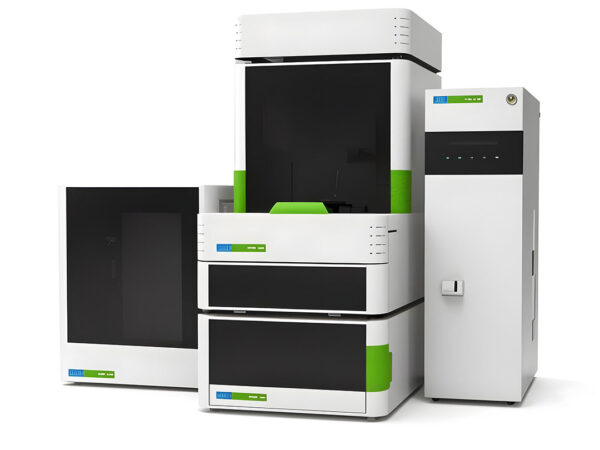
PerkinElmer QSight SP50 High-Pressure Dispenser
The QSight SP50 High-Pressure Dispenser from PerkinElmer is a cutting-edge solution for high-pressure liquid dispensing applications. This instrument ...
-

PerkinElmer QSight® 220 Multi-Opt Dual Source System
The PerkinElmer QSight® 220 Multi-Opt Dual Source System offers innovative dual-source technology, ensuring reliable and high-performance chemical an...
-

PerkinElmer QSight 210 Single Source System
The PerkinElmer QSight 210 Single Source System offers unmatched precision and efficiency in mass spectrometry, enabling seamless workflows and accura...
-

PerkinElmer QSight 110 Single Source System
The QSight 110 Single Source System from PerkinElmer is designed to deliver accurate, high-throughput liquid chromatography-mass spectrometry (LC-MS) ...
-
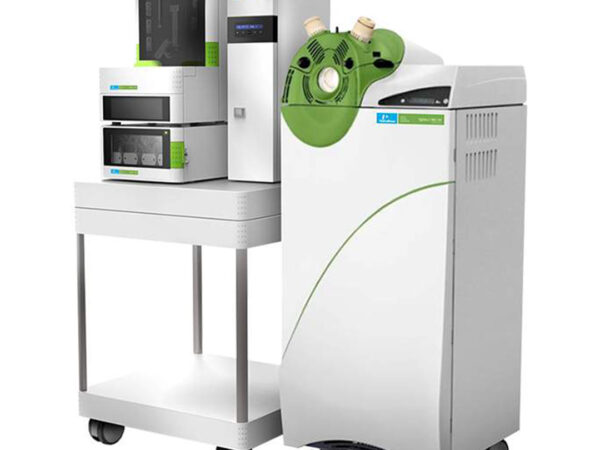
PerkinElmer QSight 420 Multi-Opt Dual Source System
The QSight 420 Multi-Opt Dual Source System by PerkinElmer is designed for laboratories demanding high-performance mass spectrometry with exceptional ...
-

Shimadzu Compound Composer Database Software
The Shimadzu Compound Composer Database Software is a comprehensive tool designed for efficient data analysis and compound identification in GC-MS app...
-

Thermo Fisher Scientific LTQ XL™ Linear Ion Trap Mass Spectrometer
The LTQ XL™ Linear Ion Trap Mass Spectrometer from Thermo Fisher Scientific offers precise mass analysis with robust sensitivity and a user-friendly...
-

Thermo Fisher Scientific Vanquish™ MD HPLC
The Thermo Fisher Vanquish™ MD HPLC System delivers robust performance and precise results for liquid chromatography applications in clinical and re...
-

Bruker amaZon speed
The Bruker amaZon speed offers unrivaled performance with its fast MS/MS acquisition speed, high sensitivity, and innovative SMART fragmentation. Itâ€...
-

Bruker amaZon speed ETD
The amaZon speed ETD is designed for advanced proteomics, providing high dynamic range, top-down sequencing, and unmatched speed. It is ideal for bott...
-
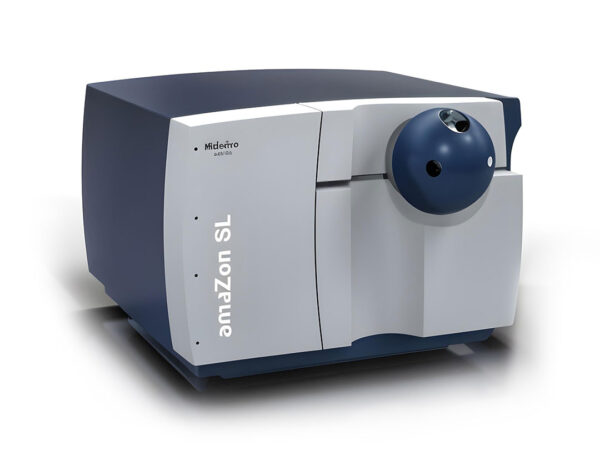
Bruker amazon-sl
The Bruker Amazon SL is an advanced ESI Ion Trap Mass Spectrometer known for its superior performance in quantitative and qualitative analysis. It off...
-

Bruker NanoElute™ 2
The NanoElute™ 2 by Bruker is an innovative nano-LC system designed to deliver superior precision and reliability for advanced proteomics and life s...