

Unlocking High-Performance DNA Microarray Scanner Technology for Fluorescence and Colorimetric Array Analysis
Introduction to Microarray Imaging and Products: Microarray scanners are sophisticated instruments engineered to detect and quantify fluorescence signals from labeled DNA or RNA hybridized to microarray chips. By means of dual lasers, typically operating at 532 nm and 633 nm, these scanners simultaneously measure two distinct dyes, such as Cy3 and Cy5. This capability facilitates comprehensive two-color microarray studies. The technology offers rapid, automated scanning with exceptional sensitivity, ensuring accurate analysis across a broad dynamic range of target concentrations.read more
The scanners convert fluorescence signals into digital data through high-performance photomultiplier tubes (PMTs) and low-noise amplifiers. Once captured, the data is often exported as a high-resolution tiff image for downstream processing. Their precision and reproducibility make them indispensable for critical applications, including genotyping, gene expression profiling, methylation studies, and biomarker discovery.
What Distinguishes High-Performance DNA Microarray Analysis and Fluorescence Imaging?
- Dual-Laser Excitation: Advanced systems typically include two lasers firing at 532 and 633 nm to excite the target fluorophore, including Cy3 and Cy5 dyes. This dual-channel design supports two-color hybridization studies, allowing for the direct comparison of sample and control signals on a single array. This approach significantly enhances efficiency and reduces experimental variability.
- Signal Clarity: These scanners are optimized to deliver robust signal clarity with minimal background interference, specifically within the Cy3 and Cy5 emission ranges. High signal-to-noise ratios ensure the accurate detection of low-abundance targets, increasing confidence in results and supporting sensitive applications like biomarker analysis.
- Wide Dynamic Range: Modern microarray scanners can measure fluorescence levels spanning up to 5 orders of magnitude. This extensive range enables the detection of both low- and high-abundance transcripts within the same experiment, ensuring comprehensive profiling of gene expression or genetic variations.
- Precision Detection: High-performance photomultiplier tubes convert emitted fluorescence into electrical signals with exceptional sensitivity. Low-noise amplifiers and digital integrators further refine these signals to produce precise digital measurements. This supports highly reliable quantification, even when signal levels are low.
- High-Speed Automation: The laser excitation system scans rapidly across the entire microarray surface, enabling high-throughput sample processing. Automated features reduce hands-on time and improve consistency between runs.
- Versatile Format Support: The scanners accommodate various array formats used for genotyping, epigenetic profiling, transcriptomics, and custom assay designs. They support arrays with thousands of probes, including specialized tools like Discover Chips™ containing targeted gene sets.
- Reproducible Data: With precise instrumentation and optimized optics, microarray scanners generate highly reproducible results across multiple runs and users. High call rates and stable detection systems contribute to superior data quality.
What Are the Primary Microarray Scanner Uses in Illumina, Protein Microarrays, and Analysis Software?
- Gene Expression Profiling: DNA microarray technology is widely used to measure gene expression levels across thousands of genes simultaneously. By detecting fluorescence intensity from labeled RNA, genes that are up- or down-regulated can be identified. This insight helps elucidate cellular responses, disease mechanisms, and pathway activation.
- Genotyping and SNP Analysis: Microarray scanners enable the detection of single-nucleotide polymorphisms (SNPs) and genetic variants across the genome. Their high sensitivity and dual-laser capability allow for accurate allele discrimination.
- DNA Methylation and Epigenetic Studies: These scanners support methylation-specific microarrays to assess epigenetic changes across CpG sites. Their wide dynamic range ensures the precise measurement of subtle methylation differences, aiding in cancer research, developmental biology, and epigenetic biomarker discovery.
- Comparative Genomic Hybridization: Scanners are frequently used to detect copy number variations (CNVs) and chromosomal aberrations across the genome. Two-color scanning facilitates the comparison of patient and reference DNA on the same chip for accurate CNV detection. This is particularly useful in cancer diagnostics and congenital disorder analysis.
- Biomarker Discovery and Validation: By analyzing gene expression or mutation patterns, microarray scanners assist in identifying molecular biomarkers associated with diseases. Their reproducibility supports the reliable data generation required for clinical validation. Such biomarkers can improve diagnosis, prognosis, and therapeutic decision-making.
- Pharmacogenomics and Drug Response Studies: Microarray scanners assist in identifying genetic variants that influence drug metabolism and response. By profiling gene expression changes following drug exposure, they help predict toxicity and therapeutic efficacy. This supports personalized treatment strategies and safer drug development.
- Microbial Detection and Pathogen Typing: Specialized microarrays scanned using these instruments can identify bacterial, viral, and fungal pathogens based on unique genetic signatures. The scanning capability enables rapid parallel analysis of multiple organisms.
- Agricultural and Agrogenomics Applications: In plant and animal genomics, microarray scanners help assess genetic traits, disease resistance, and breeding value. They support SNP arrays and expression arrays used for crop improvement and livestock selection.
Showing all 2 results
Category
- Bioreactors+
- Parallel Bioreactors
- Single-Use Bioreactors
- Stirred-Tank Bioreactors
- Capillary Electrophoresis Instruments+
- Capillary Gel Electrophoresis (CGE)
- Capillary Isoelectric Focusing (CIEF)
- Capillary Zone Electrophoresis (CZE)
- Cell Counters and Analyzers+
- Automated Cell Counters
- Manual Cell Counters
- Cellular Imaging Systems+
- Fluorescence Imaging Systems
- High-Content Imaging Systems
- Live-Cell Imaging Systems
- Centrifuges+
- Benchtop Centrifuges
- Clinical Centrifuges
- Micro Centrifuges
- Refrigerated Centrifuges
- Ultracentrifuges
- Chromatography Instruments+
- Gas Chromatography
- Ion Chromatography
- Liquid Chromatography
- Flow Cytometer+
- Cell Analyzers
- Cell Isolation Systems
- Cell Sorters
- High-Throughput Flow Cytometers
- Imaging Flow Cytometry
- Personal Flow Cytometers
- Portable/Benchtop Flow Cytometers
- Spectral Flow Cytometers
- Laboratory Incubators+
- CO2 Incubators
- Dry Bath Incubators
- Hypoxia Incubators and Chambers
- Incubator Shakers
- Laboratory Ovens
- Portable Incubators
- Thermal Mixers
- Laboratory Microscopes+
- Atomic Force Microscopes (AFM)
- Automated Modular Microscopes
- Compound Microscopes
- Confocal Microscopes
- Digital Microscopes
- Fluorescence Microscopes
- Inverted Microscopes
- Live Cell Imaging Microscopes
- Metallurgical Microscopes
- Multiphoton Microscopes
- Polarizing Microscopes
- Raman Microscopes
- Scanning Electron Microscopes (SEM)
- Stereo Microscopes
- Super-Resolution Microscopes
- Transmission Electron Microscopes (TEM)
- Upright Microscopes (Neuroscience)
- Liquid Handlers+
- Automated Pipetting Systems
- Multi-Channel Liquid Handlers
- Robotic Liquid Handlers
- Variable Volume Pipetting Systems
- Mass Spectrometers+
- Ambient Ionization
- APCI MS
- ESI MS
- FT ICR MS
- ICP MS
- Orbi Trap MS
- Quadrupole MS
- Time-of-Flight MS
- Microarray Scanners+
- DNA Microarray Scanners
- Laser-Based Microarray Scanners
- Microplate Readers+
- Absorbance Microplate Readers
- Fluorescence Microplate Readers
- Luminescence Microplate Readers
- Multimode Microplate Readers
- Particle Counters and Analyzers+
- Airborne Particle Counters
- Laser Diffraction Analyzers
- Liquid Particle Counters
- Nanoparticle Analyzers
- Portable Particle Counters
- Remote Particle Counters
Brand
- ACCU-SCOPE
- Agilent
- Airmodus
- Alphasense
- Analytik Jena
- ARGO-HYTOS
- Arrayit
- Aurora Biomed Inc.
- Azure Biosystems
- Baker
- BD Biosciences
- Beckman Coulter
- Beijing Challen Biotechnology
- Binder
- Bio-Techne
- Biobase
- BioRad
- BMG Labtech
- Bruker
- Celestron
- Cellbox
- Centurion Scientific Ltd
- ChemoMetec
- CleanAir
- Cleatech
- Corning
- Countstar
- CS Instruments
- CUBIC
- Cytek Biosciences
- Cytena
- Cytiva
- Data Technologies
- Descase
- Electrolab Biotech
- Eppendorf
- Euromex
- Evident
- Fermex
- Fluke
- Formulatrix
- Getinge
- Gilson
- GPC Bio
- Haier Biomedical
- Hamilton Company
- Hettich
- Hitachi High-Tech
- Hudson Robotics Inc.
- Hydro
- INFORS HT
- Innopsys
- Jasco
- Jeiotech
- JEOL
- Kanomax
- Keyence
- KNAUER
- LAB-KITS
- Labomed
- Labwit
- Leco
- Leica
- Lighthouse
- Logos Biosystems
- LOSI
- Lumex Instruments
- Luminex
- Malvern Panalytical
- Meiji Techno
- Memmert
- Merck
- Mettler-Toledo International Inc.
- Miltenyi Biotec
- Molecular Devices
- Motic
- MP Filtri
- MSE (Medical and Scientific Equipment)
- NCI
- Nikon Instruments
- NuAire
- ORFLO Technologies
- Oxford Instruments
- PAMAS
- Particle Measuring Systems
- Particles Plus
- PBS Biotech
- PCE instruments
- PerkinElmer
- PharSol
- PHCbi
- Prior Scientific
- Promega
- Qiagen NV
- Revvity
- RION
- Sartorius
- SATAKE
- Sciex
- Sebia
- SETA
- Setra
- Shimadzu
- SIBATA
- Sigma Laborzentrifugen GmbH
- Solaris Biotech
- Solida Biotech
- Sony Biotechnology Inc.
- SPT Labtech Ltd
- Stratedigm Inc.
- Sysmex Corporation
- Tecan
- TES
- Thermo Fisher Scientific
- TSI
- Waters
- Western States Machine Company
- ZEISS
- ZETRON
-
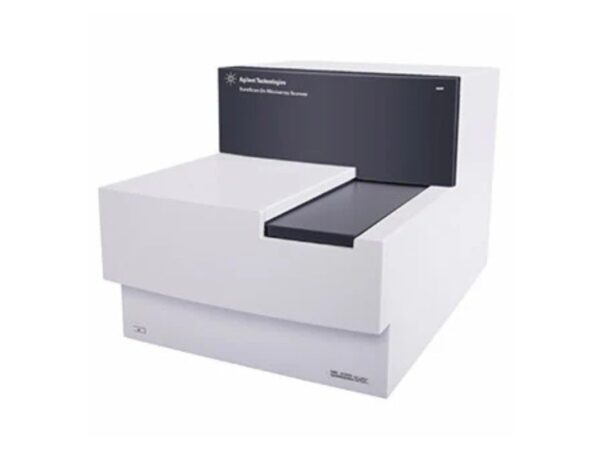
Agilent SureScan Dx
Agilent SureScan Dx Microarray Scanner offers precision scanning for clinical and diagnostic microarray applications, ensuring compliance with IVD sta...
-
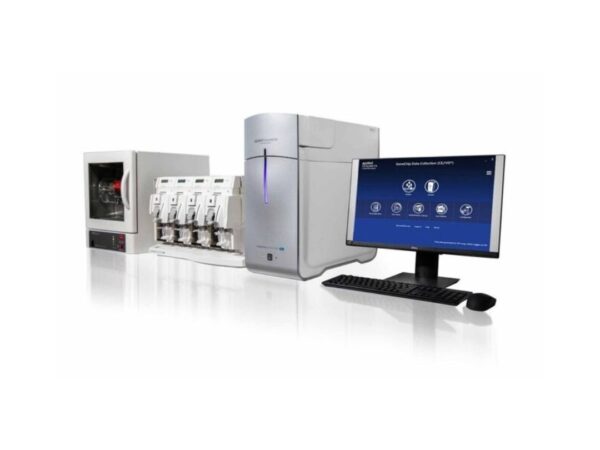
Thermo Fisher Scientific GeneChip System 3000Dx v.2 Catalog Number-00-0334
This Anti-CD19 monoclonal antibody enables the detection of B-cells in human samples using flow cytometry, making it ideal for immunophenotyping and h...