

The Multimode Microplate Reader: A Guide to Multimodal Detection
A multimode microplate reader is an advanced laboratory instrument capable of performing a wide variety of assays in standard microplates on a single, consolidated platform. Unlike single-mode instruments, a multimode reader integrates multiple detection methods, including absorbance, fluorescence, and luminescence, which enhances experimental versatility and throughput. This consolidation of capabilities allows laboratories to conserve valuable bench space and streamline their research workflow.read more
When selecting a multimode microplate reader, key factors to evaluate include the breadth of supported assays, the modularity for future upgrades, and the overall instrument cost. As detection technologies continue to advance, modern readers offer improved sensitivity and automation, making them a highly cost-effective and indispensable tool for contemporary research and diagnostics.
What Detection Modes and Technologies Define a Modern Multimode Plate Reader?
- A multimode microplate reader provides unparalleled flexibility by integrating several core detection modes within a single instrument. These typically include absorbance, fluorescence, and luminescence, with options to incorporate advanced techniques such as TR-FRET (Time-Resolved Fluorescence Resonance Energy Transfer), BRET (Bioluminescence Resonance Energy Transfer), and fluorescence polarization. This versatility allows researchers to efficiently execute a broad range of assays using one consolidated system.
- The optical system is paramount for achieving accurate and reproducible results. Wavelength selection is typically managed by either a flexible monochromator or a highly sensitive filter-based system. A monochromator offers the ability to scan across a wide wavelength spectrum, whereas an optical filter provides superior light transmission for a specific excitation and emission wavelength. High-end systems may feature a hybrid design that combines a monochromator with an optional filter to maximize both flexibility and sensitivity for measurements like fluorescence intensity. The choice of filter is crucial for isolating the precise emission signal and maximizing performance. This filter-based approach often yields superior results for dedicated assays.
- Advanced detection technologies include time-resolved fluorescence (TRF), which enhances sensitivity by measuring the delayed emission signal after a pulse of excitation light, effectively minimizing short-lived background fluorescence. Assays based on time-resolved fluorescence (TRF), particularly homogeneous TR-FRET formats, are exceptionally sensitive. The performance of both time-resolved fluorescence (TRF) and TR-FRET assays depends on precise timing and specific excitation and emission wavelength pairs, which are selected by either a monochromator or a dedicated filter. Similar resonance energy transfer principles apply to BRET assays, which measure interactions via a luminescent donor and a fluorescent acceptor.
- Intuitive analysis software streamlines the entire workflow, from initial assay setup to final data analysis and reporting. For high-throughput environments, compatibility with robotic liquid handlers and laboratory information management systems (LIMS) is essential for enabling fully automated workflows and ensuring consistent performance across large-scale screening campaigns.
How Does a Multimode Reader Streamline an Assay Workflow in Research?
A multimode reader is central to diverse research applications, enabling the rapid analysis of various assays conducted in standard microplates.
- Immunoassays: Multimode plate readers are extensively used for various immunoassays to quantify proteins, hormones, and antibodies. Their ability to measure absorbance, fluorescence intensity, or luminescence enables precise measurement of signals generated from a chromogenic or chemiluminescent reagent.
- Protein and Nucleic Acid Quantification: These instruments are ideal for determining macromolecule concentrations using established colorimetric or fluorescent methods. Quantification can be performed via absorbance at a specific wavelength (e.g., 260/280 nm) or with a highly sensitive fluorescent reagent that binds to the target molecule.
- Cell-Based Assays: A multimode reader supports a multitude of live-cell assays, including those that monitor cell viability, cytotoxicity, and apoptosis. The inclusion of precise temperature control and gas handling is critical for maintaining optimal physiological conditions during real-time kinetic studies of processes like cell viability.
- Enzyme Kinetics and Activity Assays: These readers are perfectly suited for measuring enzymatic reactions in real time by detecting changes in signal (e.g., absorbance or fluorescence intensity) after the addition of a substrate reagent. This makes them invaluable for studying enzyme kinetics, inhibitor screening, and pathway analysis for targets such as kinase enzymes.
- Drug Discovery and High-Throughput Screening: In pharmaceutical research, multimode readers facilitate the large-scale screening of chemical compound libraries. Their compatibility with advanced detection technologies like fluorescence polarization, TR-FRET, and BRET, combined with rapid data acquisition, significantly accelerates the screening process.
- Gene Expression Studies: Researchers utilize multimodal readers to quantify gene expression through reporter assays involving luminescent or fluorescent proteins. The ability to detect these signals with high sensitivity is critical for both transient and stable expression systems, where the signal from a reporter reagent is measured. Ultimately, the full power of the instrument is realized through comprehensive data analysis software designed to process complex datasets from all available detection modes.
- Biomarker and Signaling Pathway Analysis: The instruments are applied in studying biomarkers and intracellular signaling using multiplexed assay formats. Their multidetection capability allows simultaneous monitoring of multiple analytes within a single well.
Showing 1–12 of 54 results
Category
- Bioreactors+
- Parallel Bioreactors
- Single-Use Bioreactors
- Stirred-Tank Bioreactors
- Capillary Electrophoresis Instruments+
- Capillary Gel Electrophoresis (CGE)
- Capillary Isoelectric Focusing (CIEF)
- Capillary Zone Electrophoresis (CZE)
- Cell Counters and Analyzers+
- Automated Cell Counters
- Manual Cell Counters
- Cellular Imaging Systems+
- Fluorescence Imaging Systems
- High-Content Imaging Systems
- Live-Cell Imaging Systems
- Centrifuges+
- Benchtop Centrifuges
- Clinical Centrifuges
- Micro Centrifuges
- Refrigerated Centrifuges
- Ultracentrifuges
- Chromatography Instruments+
- Gas Chromatography
- Ion Chromatography
- Liquid Chromatography
- Flow Cytometer+
- Cell Analyzers
- Cell Isolation Systems
- Cell Sorters
- High-Throughput Flow Cytometers
- Imaging Flow Cytometry
- Personal Flow Cytometers
- Portable/Benchtop Flow Cytometers
- Spectral Flow Cytometers
- Laboratory Incubators+
- CO2 Incubators
- Dry Bath Incubators
- Hypoxia Incubators and Chambers
- Incubator Shakers
- Laboratory Ovens
- Portable Incubators
- Thermal Mixers
- Laboratory Microscopes+
- Atomic Force Microscopes (AFM)
- Automated Modular Microscopes
- Compound Microscopes
- Confocal Microscopes
- Digital Microscopes
- Fluorescence Microscopes
- Inverted Microscopes
- Live Cell Imaging Microscopes
- Metallurgical Microscopes
- Multiphoton Microscopes
- Polarizing Microscopes
- Raman Microscopes
- Scanning Electron Microscopes (SEM)
- Stereo Microscopes
- Super-Resolution Microscopes
- Transmission Electron Microscopes (TEM)
- Upright Microscopes (Neuroscience)
- Liquid Handlers+
- Automated Pipetting Systems
- Multi-Channel Liquid Handlers
- Robotic Liquid Handlers
- Variable Volume Pipetting Systems
- Mass Spectrometers+
- Ambient Ionization
- APCI MS
- ESI MS
- FT ICR MS
- ICP MS
- Orbi Trap MS
- Quadrupole MS
- Time-of-Flight MS
- Microarray Scanners+
- DNA Microarray Scanners
- Laser-Based Microarray Scanners
- Microplate Readers+
- Absorbance Microplate Readers
- Fluorescence Microplate Readers
- Luminescence Microplate Readers
- Multimode Microplate Readers
- Particle Counters and Analyzers+
- Airborne Particle Counters
- Laser Diffraction Analyzers
- Liquid Particle Counters
- Nanoparticle Analyzers
- Portable Particle Counters
- Remote Particle Counters
Brand
- ACCU-SCOPE
- Agilent
- Airmodus
- Alphasense
- Analytik Jena
- ARGO-HYTOS
- Arrayit
- Aurora Biomed Inc.
- Azure Biosystems
- Baker
- BD Biosciences
- Beckman Coulter
- Beijing Challen Biotechnology
- Binder
- Bio-Techne
- Biobase
- BioRad
- BMG Labtech
- Bruker
- Celestron
- Cellbox
- Centurion Scientific Ltd
- ChemoMetec
- CleanAir
- Cleatech
- Corning
- Countstar
- CS Instruments
- CUBIC
- Cytek Biosciences
- Cytena
- Cytiva
- Data Technologies
- Descase
- Electrolab Biotech
- Eppendorf
- Euromex
- Evident
- Fermex
- Fluke
- Formulatrix
- Getinge
- Gilson
- GPC Bio
- Haier Biomedical
- Hamilton Company
- Hettich
- Hitachi High-Tech
- Hudson Robotics Inc.
- Hydro
- INFORS HT
- Innopsys
- Jasco
- Jeiotech
- JEOL
- Kanomax
- Keyence
- KNAUER
- LAB-KITS
- Labomed
- Labwit
- Leco
- Leica
- Lighthouse
- Logos Biosystems
- LOSI
- Lumex Instruments
- Luminex
- Malvern Panalytical
- Meiji Techno
- Memmert
- Merck
- Mettler-Toledo International Inc.
- Miltenyi Biotec
- Molecular Devices
- Motic
- MP Filtri
- MSE (Medical and Scientific Equipment)
- NCI
- Nikon Instruments
- NuAire
- ORFLO Technologies
- Oxford Instruments
- PAMAS
- Particle Measuring Systems
- Particles Plus
- PBS Biotech
- PCE instruments
- PerkinElmer
- PharSol
- PHCbi
- Prior Scientific
- Promega
- Qiagen NV
- Revvity
- RION
- Sartorius
- SATAKE
- Sciex
- Sebia
- SETA
- Setra
- Shimadzu
- SIBATA
- Sigma Laborzentrifugen GmbH
- Solaris Biotech
- Solida Biotech
- Sony Biotechnology Inc.
- SPT Labtech Ltd
- Stratedigm Inc.
- Sysmex Corporation
- Tecan
- TES
- Thermo Fisher Scientific
- TSI
- Waters
- Western States Machine Company
- ZEISS
- ZETRON
-

Agilent BioTek Cytation Hybrid Multimode Reader
BioTek Cytation delivers integrated imaging and detection for complete cellular assay workflows.
-

Agilent BioTek Synergy H1 Multimode Reader
The Synergy H1 offers adaptable detection using filter- and monochromator-based optics for versatility.
-

Agilent BioTek Synergy HTX Multimode Reader
Synergy HTX provides core multi-mode detection functions in a compact, reliable format.
-

Agilent BioTek Synergy LX Multimode Reader
The Synergy LX offers simple, reliable multi-mode detection for routine laboratory applications.
-

Agilent BioTek Synergy Neo2 Hybrid Multimode Reader
BioTek Synergy Neo2 offers hybrid detection and rapid read speeds for complex assay workflows.
-

BioRad Model 680 Microplate Reader
Model 680 Microplate Reader provides fast, precise absorbance measurements with dual-beam optics, user-friendly interface, and kinetic reading capabil...
-
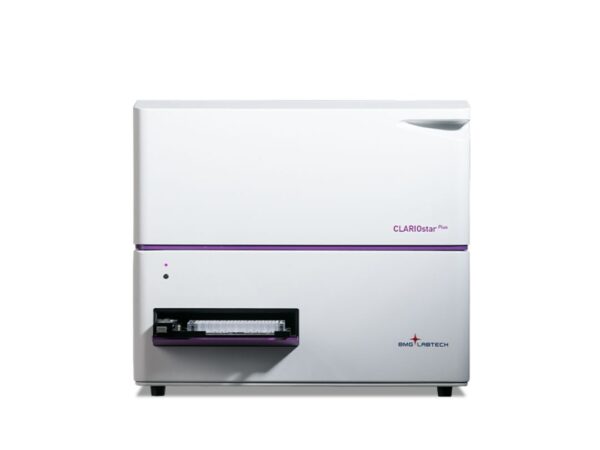
BMG Labtech CLARIOstar Plus
CLARIOstar Plus delivers flexible assay performance using LVF monochromator, filters, and a gas control module for diverse life science applications i...
-
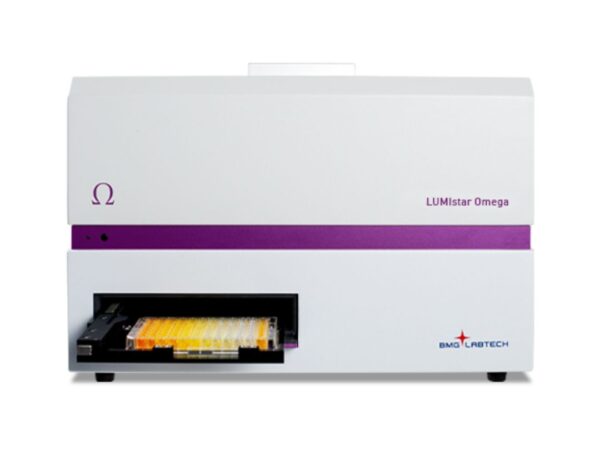
BMG Labtech LUMIstar Omega
LUMIstar Omega is a sensitive, easy-to-use luminometer offering high-performance luminescence measurements for gene expression and other biochemical a...
-
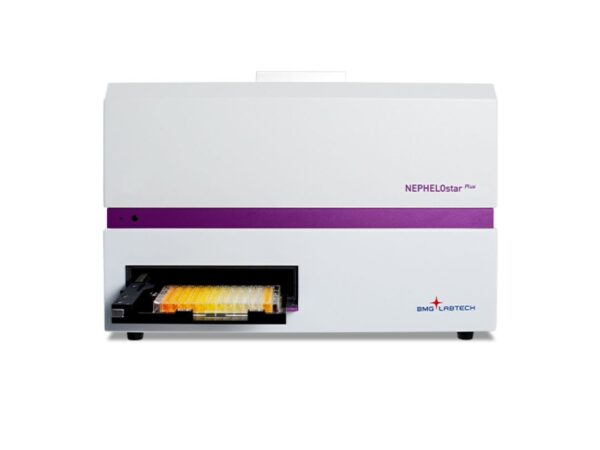
BMG Labtech NEPHELOstar Plus
NEPHELOstar Plus specializes in light-scattering analysis, ideal for determining solubility, turbidity, and other particulate-based properties in bioc...
-
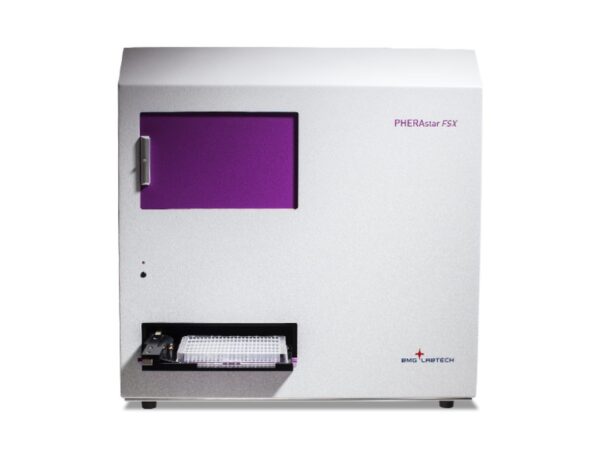
BMG Labtech PHERAstar FSX
PHERAstar FSX offers ultra-fast multimode detection for HTS applications with unmatched sensitivity, combining advanced optics and smart automation fo...
-
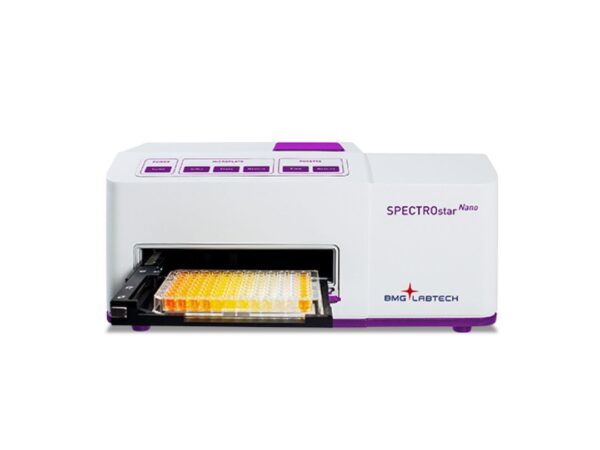
BMG Labtech SPECTROstar Nano
SPECTROstar Nano provides rapid, accurate quantification of DNA, RNA, and proteins using UV/Vis technology in microplate or cuvette format with minima...
-
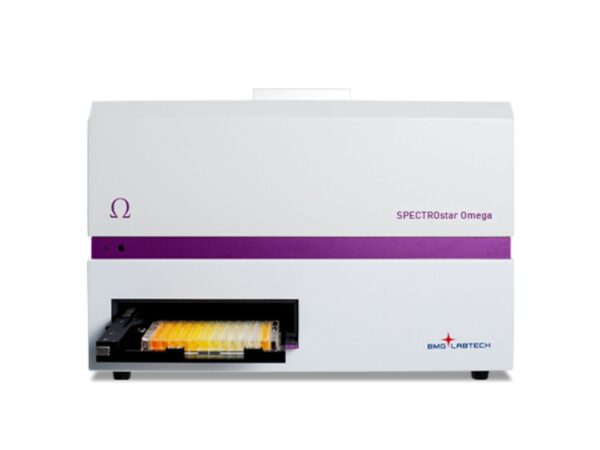
BMG Labtech SPECTROstar Omega
SPECTROstar Omega delivers full-spectrum absorbance data using advanced spectrometer technology, ensuring reproducibility and high precision for kinet...