

Particle Counters and Analyzers for Cleanroom Contamination Monitoring
Ensuring contamination-free operations is vital in the life sciences, where even microscopic particles can affect product quality, sterility, and compliance. Particle counters and particle analyzers serve as core instruments for assessing air and liquid purity, measuring particle size distribution, and maintaining cleanroom control.read more
These instruments provide the high-sensitivity data required to certify and manage controlled environments, such as a cleanroom, ensuring that operational standards are met consistently. The precise measurement of particle concentration and size is fundamental to safeguarding product integrity and ensuring regulatory adherence, making the selection of an appropriate particle counter a crucial decision.
What Defines the Best Particle Counters and Analyzers?
Contemporary particle counters and analyzers are engineered for precision, traceability, and reliability across air and liquid monitoring applications. Key attributes include:
- Wide Detection Range and High Sensitivity: Designed to measure particle sizes from submicrometer to visible ranges, these instruments deliver highly sensitive readings essential for sterile manufacturing and ISO-classified cleanrooms.
- Advanced Optical or Laser Technology: Using light-scattering and photometric detection principles, each counter or analyzer identifies and quantifies particles across multiple channels, ensuring consistent contamination assessment.
- Integrated Monitoring System Connectivity: Many models link directly to centralized monitoring systems, enabling real-time trend analysis and automated reporting. This helps facilities sustain regulatory compliance and prevent deviation events.
- Flexible Form Factors—Handheld to Fixed: From compact handheld particle counters used for spot checks to networked analyzers in fixed installations, users can mold measurement coverage to their environment’s risk profile.
- Compliance and Calibration Assurance: Instruments comply with ISO and GMP standards, featuring automated calibration routines to ensure repeatable results and full traceability across audits.
- Durable Design and Data Integrity: Robust construction, digital logging, and encrypted data storage ensure long-term reliability and precise particle count tracking in high-throughput operations.
Where Are Particle Counters and Analyzers Used?
The versatility of particle counters and particle size analyzers makes them indispensable across life sciences and other material science fields.
- Cleanroom Monitoring and Certification: Used to verify air quality and detect contamination, these tools maintain validated control levels in ISO 14644-compliant zones, from aseptic filling lines to tissue culture labs.
- Pharmaceutical Manufacturing: Ensures product purity during sterile production. Particle counters and analyzers validate particulate levels in both air and process liquids, safeguarding drug quality.
- Medical Device Assembly: Prevents particulate defects during device fabrication, particularly for implantable and sterile-packaged products requiring stringent cleanroom control.
- Biotechnology Research and Analytical Laboratories: Supports formulation development and process control through precise particle size characterization, data logging, and integrated monitoring system connections.
- Environmental and Air Filtration Testing:
Tracks particle loads in controlled environments to assess filter performance, evaluate HVAC efficiency, and maintain ISO-grade cleanliness.
Showing 1–12 of 316 results
Category
- Bioreactors+
- Parallel Bioreactors
- Single-Use Bioreactors
- Stirred-Tank Bioreactors
- Capillary Electrophoresis Instruments+
- Capillary Gel Electrophoresis (CGE)
- Capillary Isoelectric Focusing (CIEF)
- Capillary Zone Electrophoresis (CZE)
- Cell Counters and Analyzers+
- Automated Cell Counters
- Manual Cell Counters
- Cellular Imaging Systems+
- Fluorescence Imaging Systems
- High-Content Imaging Systems
- Live-Cell Imaging Systems
- Centrifuges+
- Benchtop Centrifuges
- Clinical Centrifuges
- Micro Centrifuges
- Refrigerated Centrifuges
- Ultracentrifuges
- Chromatography Instruments+
- Gas Chromatography
- Ion Chromatography
- Liquid Chromatography
- Flow Cytometer+
- Cell Analyzers
- Cell Isolation Systems
- Cell Sorters
- High-Throughput Flow Cytometers
- Imaging Flow Cytometry
- Personal Flow Cytometers
- Portable/Benchtop Flow Cytometers
- Spectral Flow Cytometers
- Laboratory Incubators+
- CO2 Incubators
- Dry Bath Incubators
- Hypoxia Incubators and Chambers
- Incubator Shakers
- Laboratory Ovens
- Portable Incubators
- Thermal Mixers
- Laboratory Microscopes+
- Atomic Force Microscopes (AFM)
- Automated Modular Microscopes
- Compound Microscopes
- Confocal Microscopes
- Digital Microscopes
- Fluorescence Microscopes
- Inverted Microscopes
- Live Cell Imaging Microscopes
- Metallurgical Microscopes
- Multiphoton Microscopes
- Polarizing Microscopes
- Raman Microscopes
- Scanning Electron Microscopes (SEM)
- Stereo Microscopes
- Super-Resolution Microscopes
- Transmission Electron Microscopes (TEM)
- Upright Microscopes (Neuroscience)
- Liquid Handlers+
- Automated Pipetting Systems
- Multi-Channel Liquid Handlers
- Robotic Liquid Handlers
- Variable Volume Pipetting Systems
- Mass Spectrometers+
- Ambient Ionization
- APCI MS
- ESI MS
- FT ICR MS
- ICP MS
- Orbi Trap MS
- Quadrupole MS
- Time-of-Flight MS
- Microarray Scanners+
- DNA Microarray Scanners
- Laser-Based Microarray Scanners
- Microplate Readers+
- Absorbance Microplate Readers
- Fluorescence Microplate Readers
- Luminescence Microplate Readers
- Multimode Microplate Readers
- Particle Counters and Analyzers+
- Airborne Particle Counters
- Laser Diffraction Analyzers
- Liquid Particle Counters
- Nanoparticle Analyzers
- Portable Particle Counters
- Remote Particle Counters
Brand
- ACCU-SCOPE
- Agilent
- Airmodus
- Alphasense
- Analytik Jena
- ARGO-HYTOS
- Arrayit
- Aurora Biomed Inc.
- Azure Biosystems
- Baker
- BD Biosciences
- Beckman Coulter
- Beijing Challen Biotechnology
- Binder
- Bio-Techne
- Biobase
- BioRad
- BMG Labtech
- Bruker
- Celestron
- Cellbox
- Centurion Scientific Ltd
- ChemoMetec
- CleanAir
- Cleatech
- Corning
- Countstar
- CS Instruments
- CUBIC
- Cytek Biosciences
- Cytena
- Cytiva
- Data Technologies
- Descase
- Electrolab Biotech
- Eppendorf
- Euromex
- Evident
- Fermex
- Fluke
- Formulatrix
- Getinge
- Gilson
- GPC Bio
- Haier Biomedical
- Hamilton Company
- Hettich
- Hitachi High-Tech
- Hudson Robotics Inc.
- Hydro
- INFORS HT
- Innopsys
- Jasco
- Jeiotech
- JEOL
- Kanomax
- Keyence
- KNAUER
- LAB-KITS
- Labomed
- Labwit
- Leco
- Leica
- Lighthouse
- Logos Biosystems
- LOSI
- Lumex Instruments
- Luminex
- Malvern Panalytical
- Meiji Techno
- Memmert
- Merck
- Mettler-Toledo International Inc.
- Miltenyi Biotec
- Molecular Devices
- Motic
- MP Filtri
- MSE (Medical and Scientific Equipment)
- NCI
- Nikon Instruments
- NuAire
- ORFLO Technologies
- Oxford Instruments
- PAMAS
- Particle Measuring Systems
- Particles Plus
- PBS Biotech
- PCE instruments
- PerkinElmer
- PharSol
- PHCbi
- Prior Scientific
- Promega
- Qiagen NV
- Revvity
- RION
- Sartorius
- SATAKE
- Sciex
- Sebia
- SETA
- Setra
- Shimadzu
- SIBATA
- Sigma Laborzentrifugen GmbH
- Solaris Biotech
- Solida Biotech
- Sony Biotechnology Inc.
- SPT Labtech Ltd
- Stratedigm Inc.
- Sysmex Corporation
- Tecan
- TES
- Thermo Fisher Scientific
- TSI
- Waters
- Western States Machine Company
- ZEISS
- ZETRON
-

Airmodus A11 nCNC
The A11 nCNC System provides controlled conditioning of aerosol flows for precision measurements.
-

Airmodus A12 nCNC
A12 nCNC offers nanoparticle neutralization and flow conditioning for CPC or SMPS systems.
-

Airmodus A20 CPC
A20 CPC delivers precise ultrafine particle counts for research and mobile monitoring uses.
-

Airmodus A20-CEN
A20 CEN CPC meets regulatory standards for vehicle particle number measurements and research.
-

Airmodus A23 CPC
The A23 CPC is designed for use in demanding automotive emission environments with fast response time.
-

Airmodus A30 CPC
A30 CPC is optimized for high-sensitivity detection of sub-23 nm particles in air monitoring tasks.
-
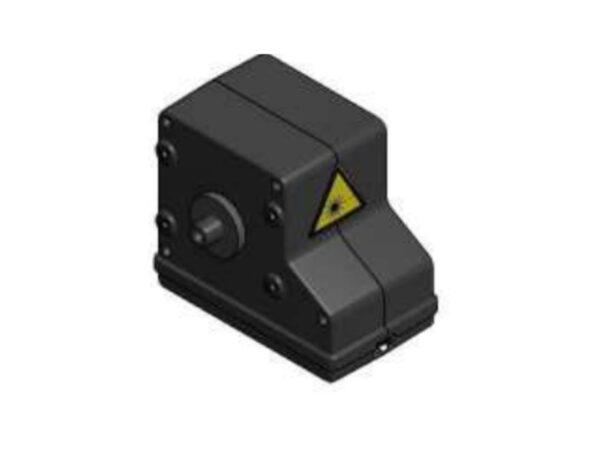
Alphasense OPC-N3
OPC-N3 offers real-time particulate measurement with improved bin resolution and stability.
-

Alphasense OPC-R2
OPC-R2 provides accurate particle size and count data in a compact, efficient form.
-

ARGO-HYTOS OPCount
OpCount enables real-time monitoring of fluid contamination in hydraulic systems with portability and precision.
-

Beckman Coulter HIAC 9703+ Pharmaceutical PC
The HIAC 9703+ delivers accurate liquid particle counting for pharmaceutical and industrial use.
-

Beckman Coulter MET ONE 3400+ Airborne PC
The Met One 3400+ enables real-time airborne particle measurement in controlled environments.
-

Beckman Coulter MET ONE 3413+ GMP Air PC
Designed for stringent pharma cleanrooms, Met One 3400+ ensures regulatory-compliant monitoring.